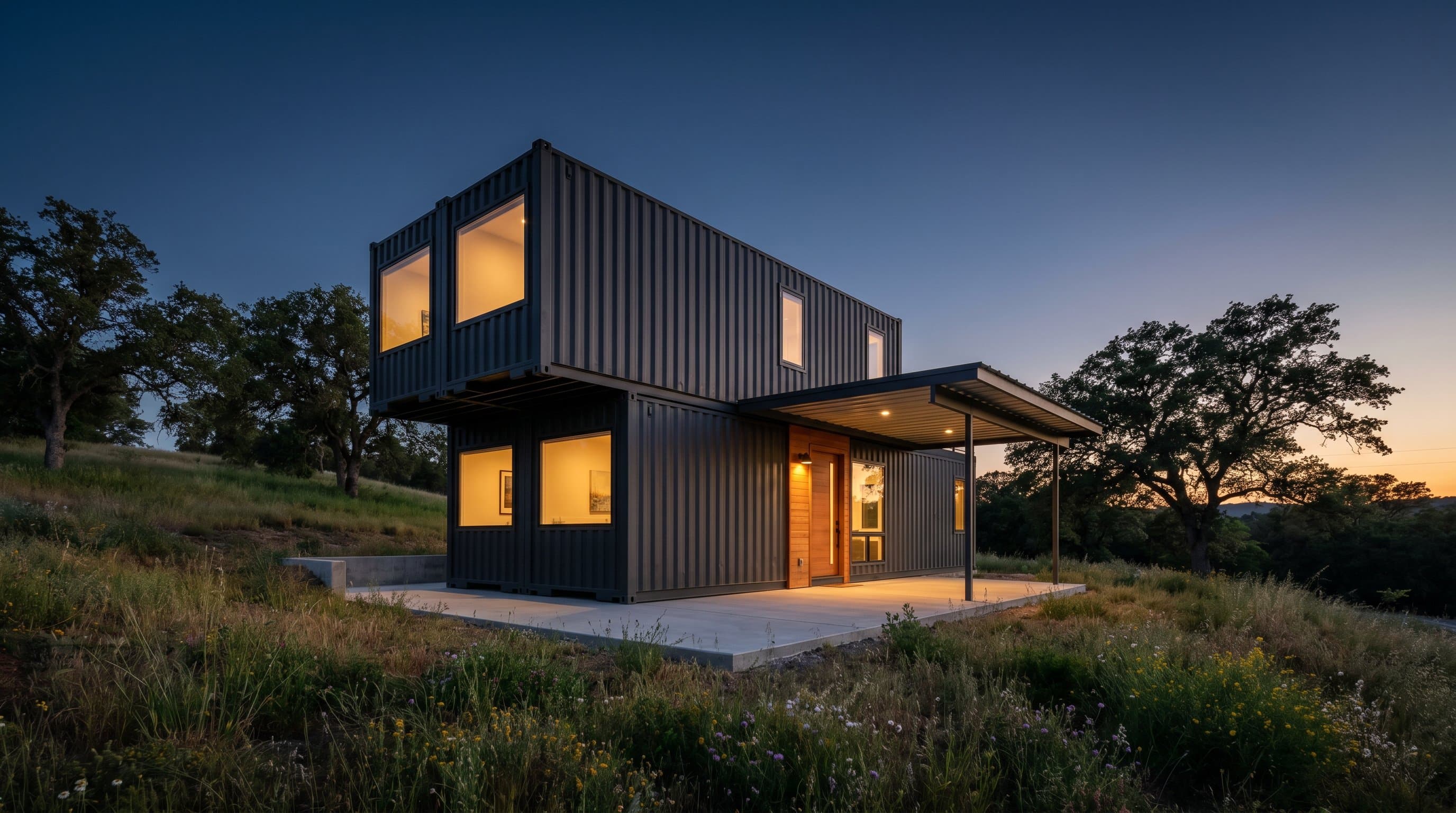
A container home starts with the right box.
One-trip containers give you a square, clean-floored, modification-ready shell. Used boxes cost less but can fight you on cuts and welds.
Why this fits.
- New / One-Trip
- Near-new condition. Square, minimal dents, clean wood floor. The right starting point for residential builds.
- High-cube height
- 9ft6in exterior gives you ~8ft4in finished ceilings after insulation and flooring.
- Modification-ready
- Clean steel welds cleanly. Cutouts for windows and doors stay true.
- Match sets
- We source matched color/production-run containers for multi-box builds.
The right starting point for container homes.
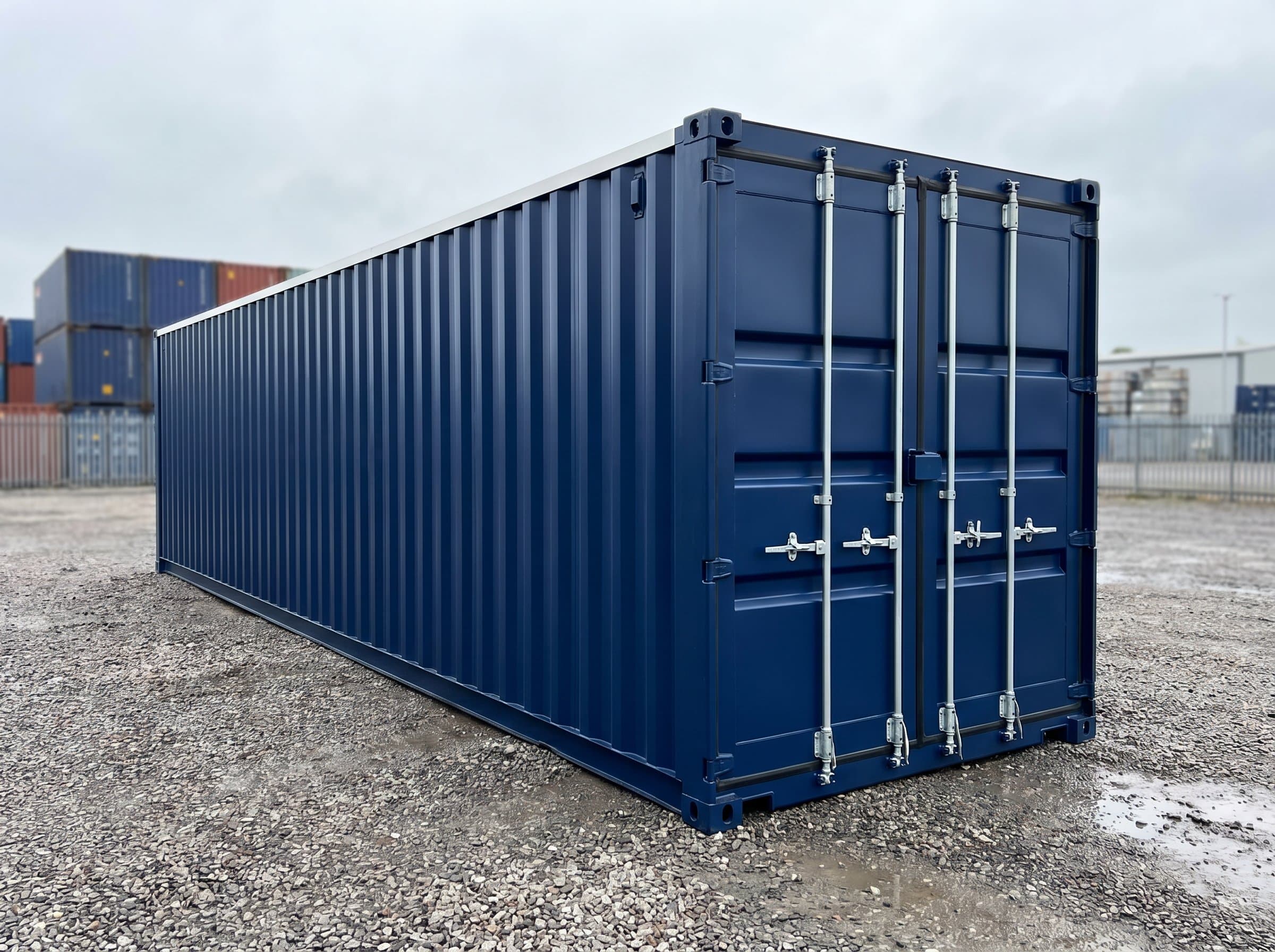
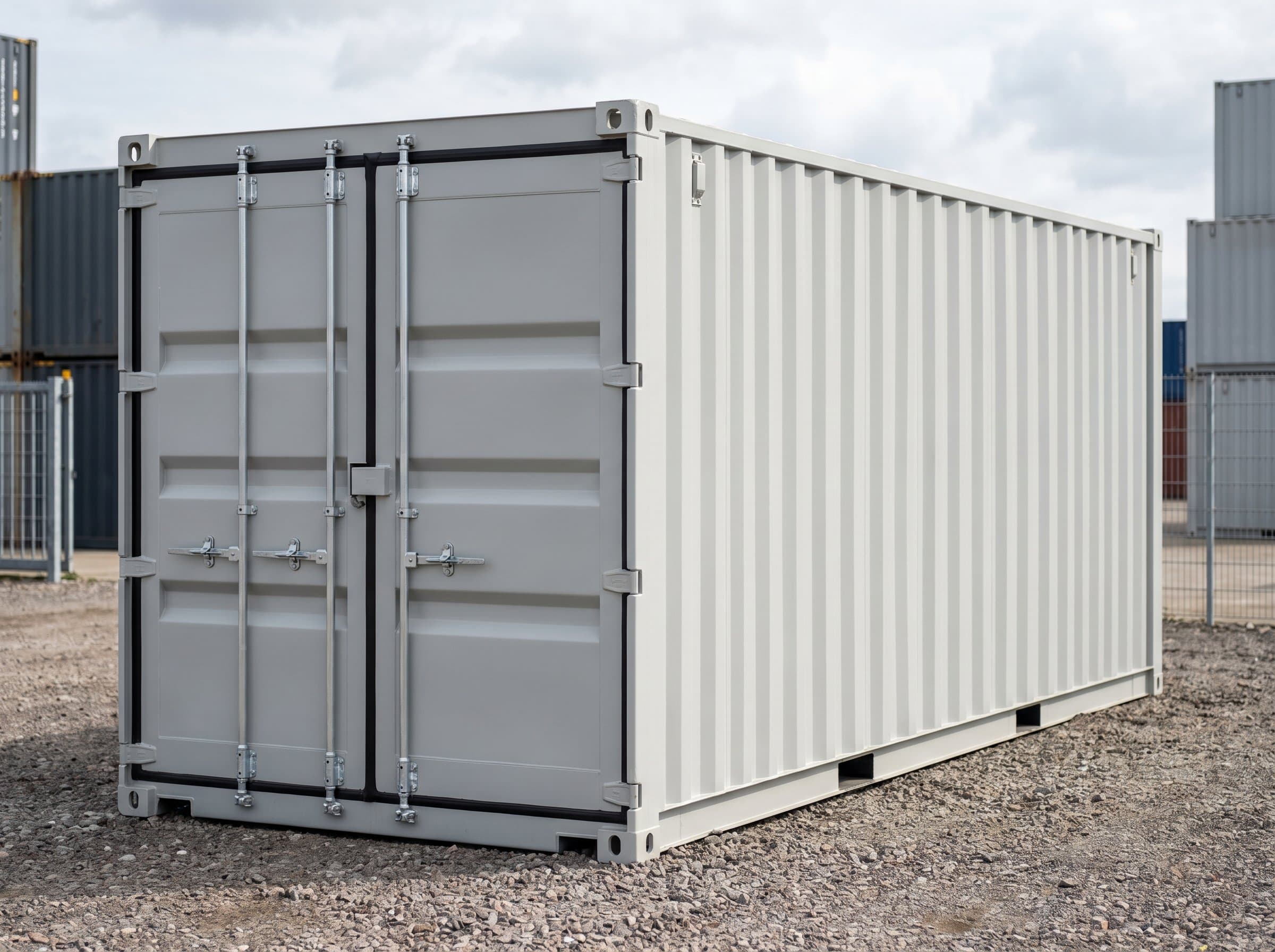
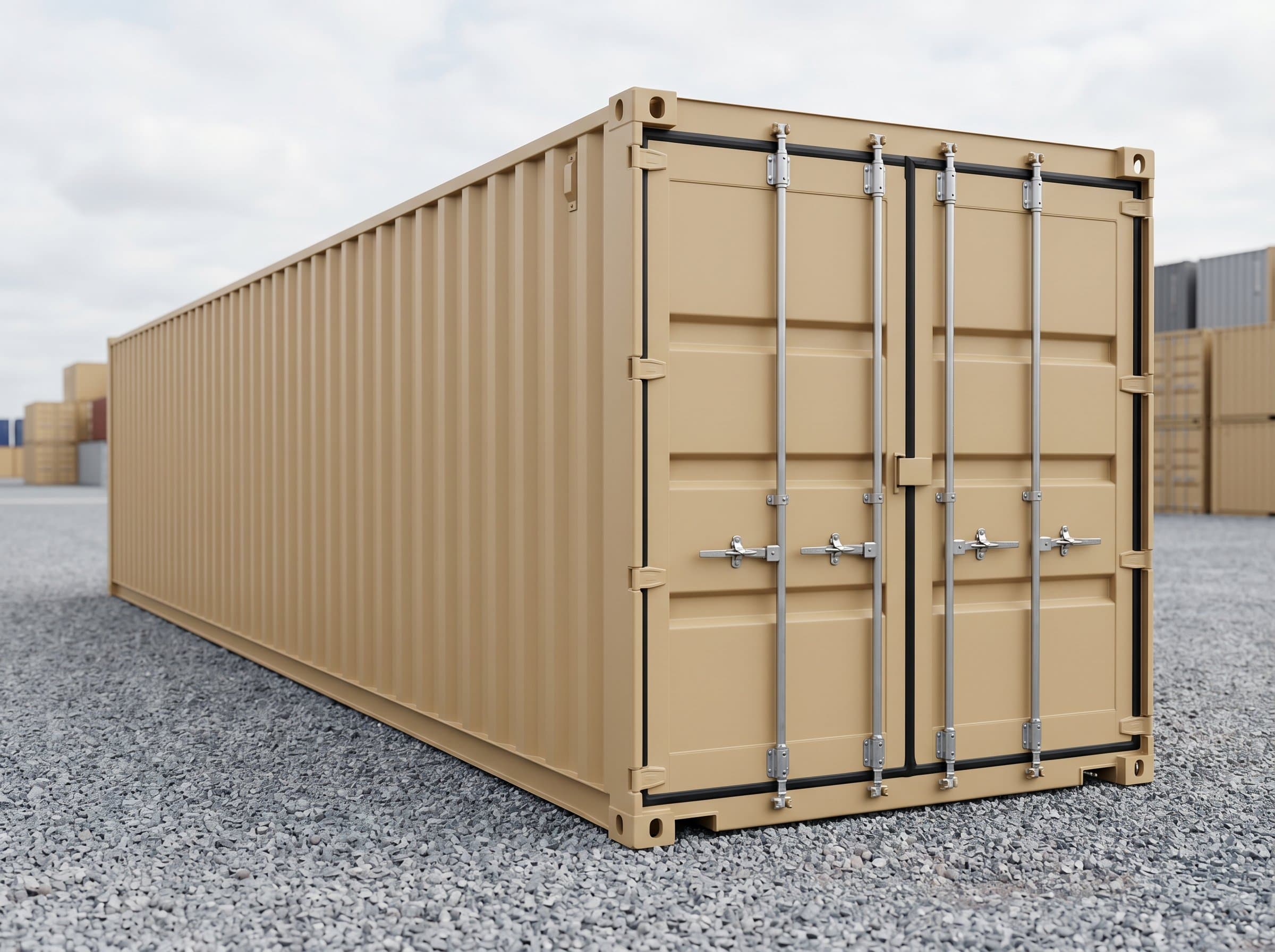
A container home is one of the most cost-effective ways to build a small, permanent, code-compliant dwelling. But the quality of the finished home is set, almost entirely, by the quality of the steel you start with. This page exists to make sure you start with the right box.
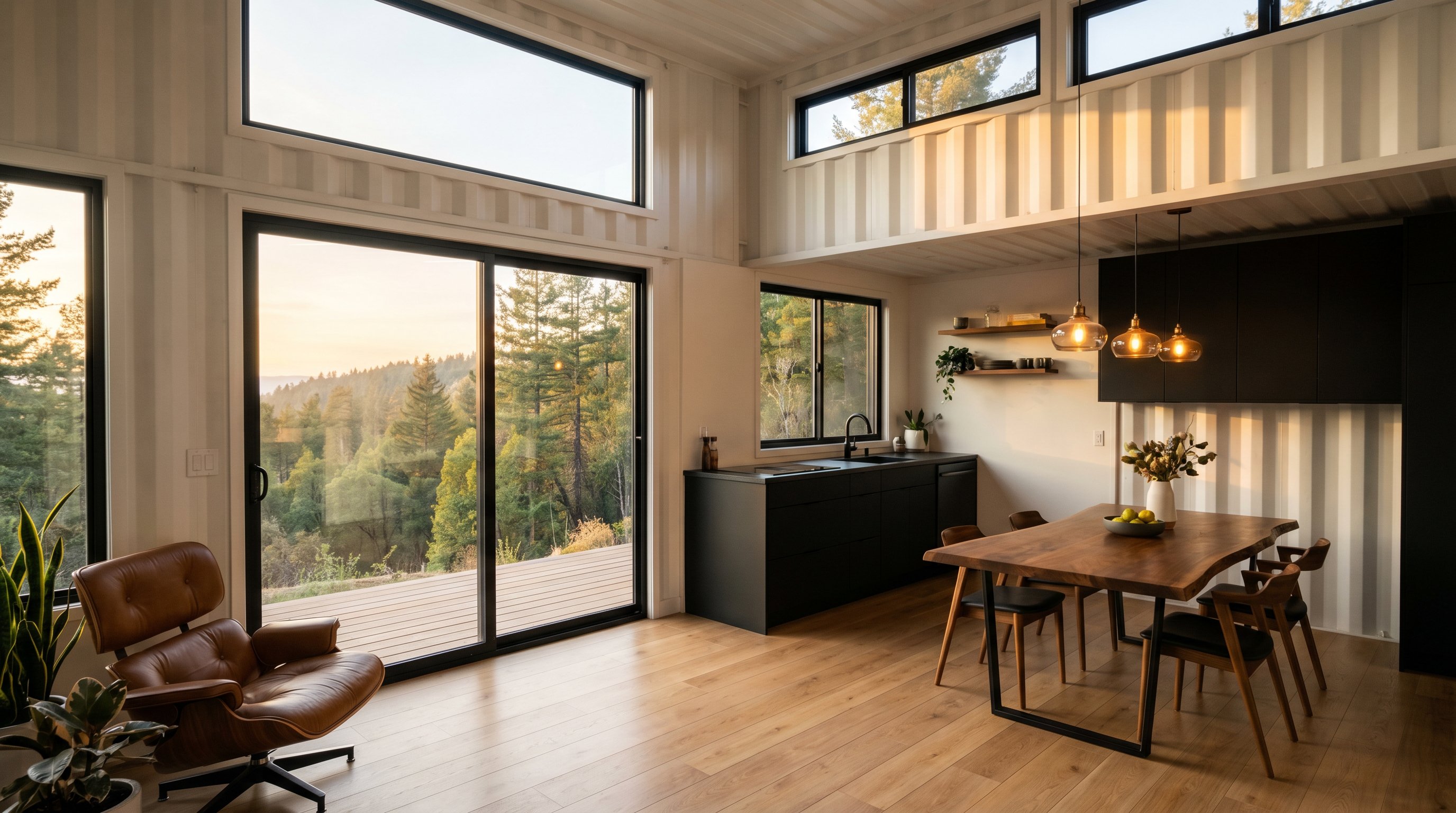
Every buyer we have helped with a container home — from a single-box ADU to a 6-container modern farmhouse — has come to the same conclusion after the fact: order one-trip, order high-cube, and order matched production runs. The one-trip premium of ~$2,000 per box is the single highest-ROI line item in the entire build, because it is the only line item that determines whether your cut-outs stay square, your welds hold, and your interior finish lays flat for 20 years.
Who should (and should not) build with containers
Container homes are a great fit for:
- Small dwelling units (ADUs, guest houses, studio residences) — 160 to 320 sqft.
- Modern architectural builds where the exposed corrugation is a design feature, not a defect to be hidden.
- Buyers in permissive jurisdictions — unincorporated counties and states with modern accessory-dwelling rules (CA, OR, WA, CO, TX, NC, VT).
- Remote / off-grid parcels where delivering a 40ft steel structure is cheaper and faster than stick-framing on-site.
They are a harder fit for:
- Family-size primary residences where the long-thin floor plan becomes a design constraint rather than a feature.
- Heavily-regulated municipalities (most major coastal cities, strict HOA neighborhoods) where container aesthetics trigger design review.
- Buyers trying to save money over traditional stick-build — modified container homes routinely cost $200–$350/sqft finished. A well-run stick-build in a rural market lands $175–$250/sqft. Containers win on speed, design character, and off-grid logistics — not always on raw cost.
Read our container home plans: 6 floor layouts homeowners actually build guide for real floor plans if you are still in the research phase.
Sizing: one-trip 40ft high-cube is the standard
| Configuration | Interior | Typical use |
|---|---|---|
| Single 20ft HC | ~160 sqft | Office studio, tiny house, ADU (check local ADU minimums). |
| Single 40ft HC | ~320 sqft | 1-bed ADU, guest house, backyard studio. |
| Two 40ft HC side-by-side | ~640 sqft | 2-bed ADU, small primary residence. |
| Stacked 40ft HC + 40ft HC | ~640 sqft, two floors | Modern 2-story small home with exterior stair or interior stair cut. |
| 4+ containers, L-shape or courtyard | 1,200+ sqft | Small family home, architectural builds. |
Always specify high-cube (9ft 6in exterior height) for residential builds. Standard 8ft 6in containers lose ~18in of finished ceiling height after floor framing and ceiling insulation, which puts you below residential code minimums in many jurisdictions. High-cube leaves you with ~8ft 4in finished ceilings — exactly code-compliant.
Grade: New / One-Trip, every time
This is the single most consistent piece of advice we give to first-time container-home buyers: buy new. Every time.
A used wind-and-watertight box saves you ~$2,000 upfront. That savings evaporates the moment you:
- Cut a window opening and discover the frame is out-of-square by 3/8in (now you are shim-welding to square it before you can hang the window).
- Discover that the wood floor has been treated with organophosphate pesticide (some older containers) and needs to be removed and replaced before occupancy.
- Find rust pitting under paint that extends into the cut-out path for your door or window (now you are plate-welding patches).
New / One-Trip containers are factory-clean, factory-square, and carry a clean wood floor with no pesticide history. Every square cut is a clean square. Every weld takes at first pass. The $2,000 premium per box pays for itself in the first two window cut-outs.
Cost: what a container home actually runs
A realistic delivered + modified budget for a single 40ft high-cube one-trip container home:
- Container (one-trip HC, delivered): $6,400–$7,800.
- Foundation / piers / pad: $1,500–$8,000 depending on site and soil.
- Insulation (closed-cell spray foam, 2in): $2,800–$4,200.
- Interior framing + drywall: $3,500–$6,500.
- Electrical (full rough + finish, 100A panel): $4,500–$8,500.
- Plumbing (if wet unit): $4,000–$9,000.
- HVAC (mini-split, 12–18k BTU): $3,500–$5,500.
- Windows + doors (1 entry + 2–3 windows): $2,500–$6,000.
- Flooring + interior finishes: $3,000–$8,000.
- Exterior treatment (paint, cladding if added): $1,500–$6,000.
- Permitting + design + engineering: $2,000–$8,000.
Total for a single-container fully-finished ADU: $45,000–$85,000 all-in, not counting land. Multi-container projects scale roughly linearly per box, with economies of scale on labor, permits, and design.
Permits: the single most underestimated step
Every jurisdiction treats container homes differently. The big categories:
- Permissive (unincorporated counties, rural townships): container homes are treated as any other accessory structure. Standard building permit, standard inspection cycle, no special container-specific rules. Most of Texas, Arizona, Colorado, North Carolina, Tennessee, Florida outside the big metros.
- Neutral (state ADU-friendly jurisdictions): explicit ADU rules apply. California post-SB9/SB10, Oregon, Washington, Vermont. Container homes qualify under standard ADU envelopes.
- Restrictive (big coastal metros, strict HOAs): containers may trigger design review, be outright prohibited, or require cladding / architectural features to disguise the corrugation. NYC, Boston, most HOA-governed suburbs.
The single biggest mistake first-time buyers make is ordering the container before confirming permit-ability. Our rule: call your local building department with your parcel number and the words "accessory dwelling unit built from a shipping container" before you buy anything. Their answer decides whether you are on a 90-day build path or an 18-month variance fight.
Common mistakes
- Buying used to save money. Covered above — it costs more by the time the build is done.
- Forgetting the high-cube. Standard 8ft 6in containers leave you with 7ft finished ceilings after insulation. Uninhabitable in most codes.
- Skipping closed-cell spray foam insulation. Steel has zero thermal mass and conducts condensation like a cup of ice water. Batt insulation alone will mold inside 18 months. Closed-cell is non-negotiable.
- Not specifying matched production runs. If you are doing a multi-container build, order matched production runs from a single depot. Color and profile vary enough between runs that two side-by-side non-matched boxes look visibly mismatched.
- Running utilities through cut steel without sleeves. Raw steel cut-outs will abrade wire insulation over time. Use rubber grommets and conduit sleeves on every penetration.
Timeline
From deposit to move-in for a single-container ADU, in a permissive jurisdiction:
- Week 0–2: permits, site prep, foundation piers.
- Week 2–3: container delivered, placed, leveled, anchored.
- Week 3–6: rough-in (electrical, plumbing, HVAC rough), window + door cut-outs, insulation.
- Week 6–10: drywall, finish electrical, finish plumbing, flooring, interior finishes.
- Week 10–12: exterior paint, final inspection, certificate of occupancy.
Multi-container projects typically run 4–8 months.
What container homes buyers tell us after delivery.
Got a one-trip 40ft HC for a detached studio build. The depot photos sold me — the real unit looked exactly like them. Square, clean, zero rust. Our framer said it was the best box he has ever cut into.
Third container home project with these guys. Matched production runs on all three. Cladding went on flat, no shim-welding on cut-outs. That matters when you are billing the owner by the week.
Took the advice to go one-trip. My framer said he could tell the difference the moment he put a torch to the first window cut-out. Clean steel, clean welds, one take. Worth every penny of the upcharge.
Questions we get on every quote.
Keep researching container homes.
Long-form guides written by our own sourcing team. No fluff, no affiliate spam, just the stuff we tell people on the phone every week.
A straight answer on 20ft vs 40ft shipping container offices: what fits, what each costs delivered, and when to spend the extra 45 percent on the 40ft.
The six container home floor plans we see buyers actually build, with real square footage and which container sizes make each layout work. No Pinterest fantasy.
A plain-English walkthrough of the four grades you will see on any container listing (New/One-Trip, CW, WWT, As-Is), what each means for your project, and when to pay more.
The delivery line item is where most container purchases blow up. Here is the math behind tilt-bed, flatbed, and crane delivery so you can budget before you quote.
Other use cases
We’ll text you back within 1 business hour.
Share your ZIP and what you’re building. We’ll send a written quote with the delivered, all-in number, or tell you where to buy cheaper if we can’t beat it.
Container Homes guide last reviewed .