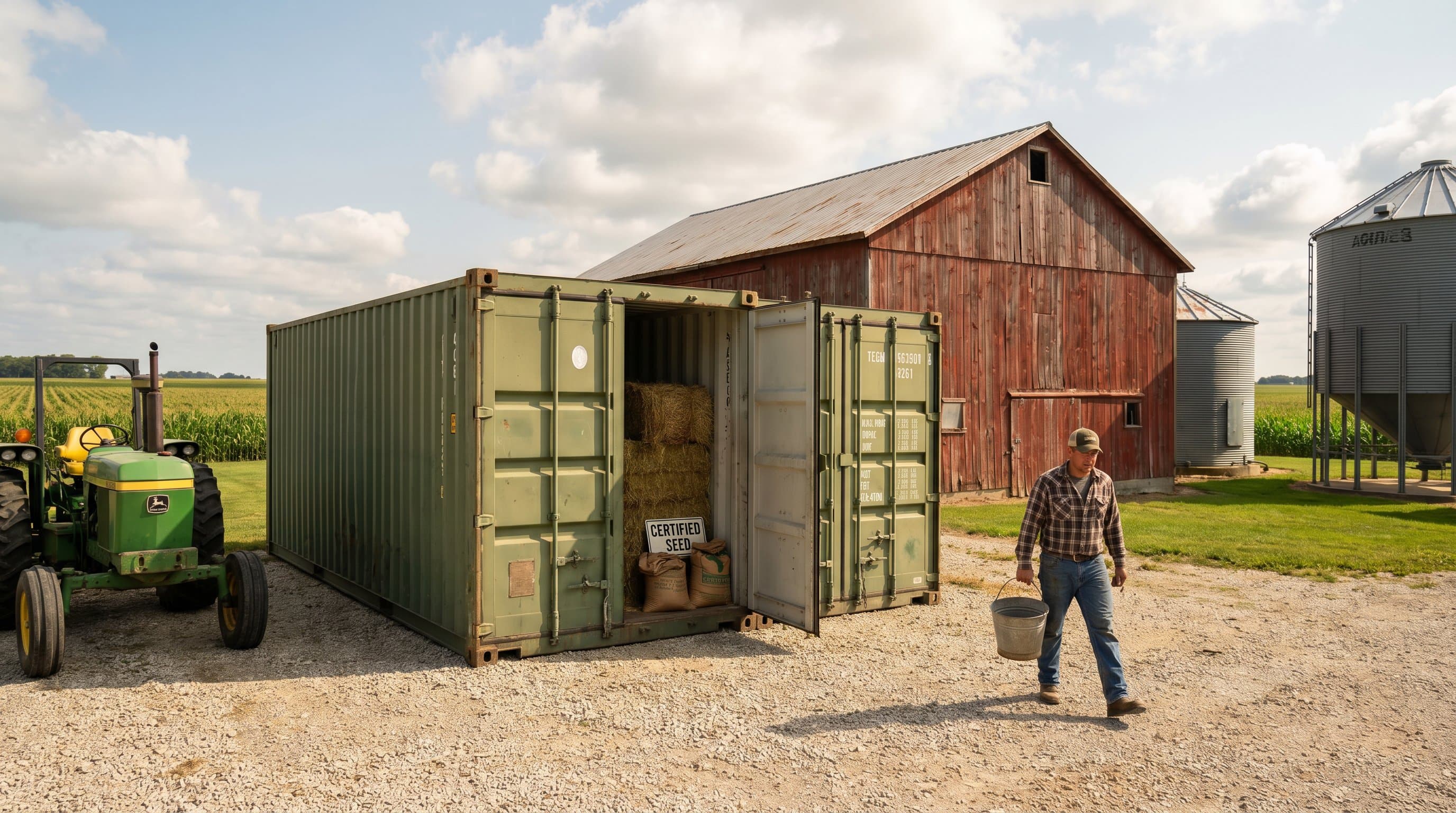
A grain bin alternative that ships on a flatbed.
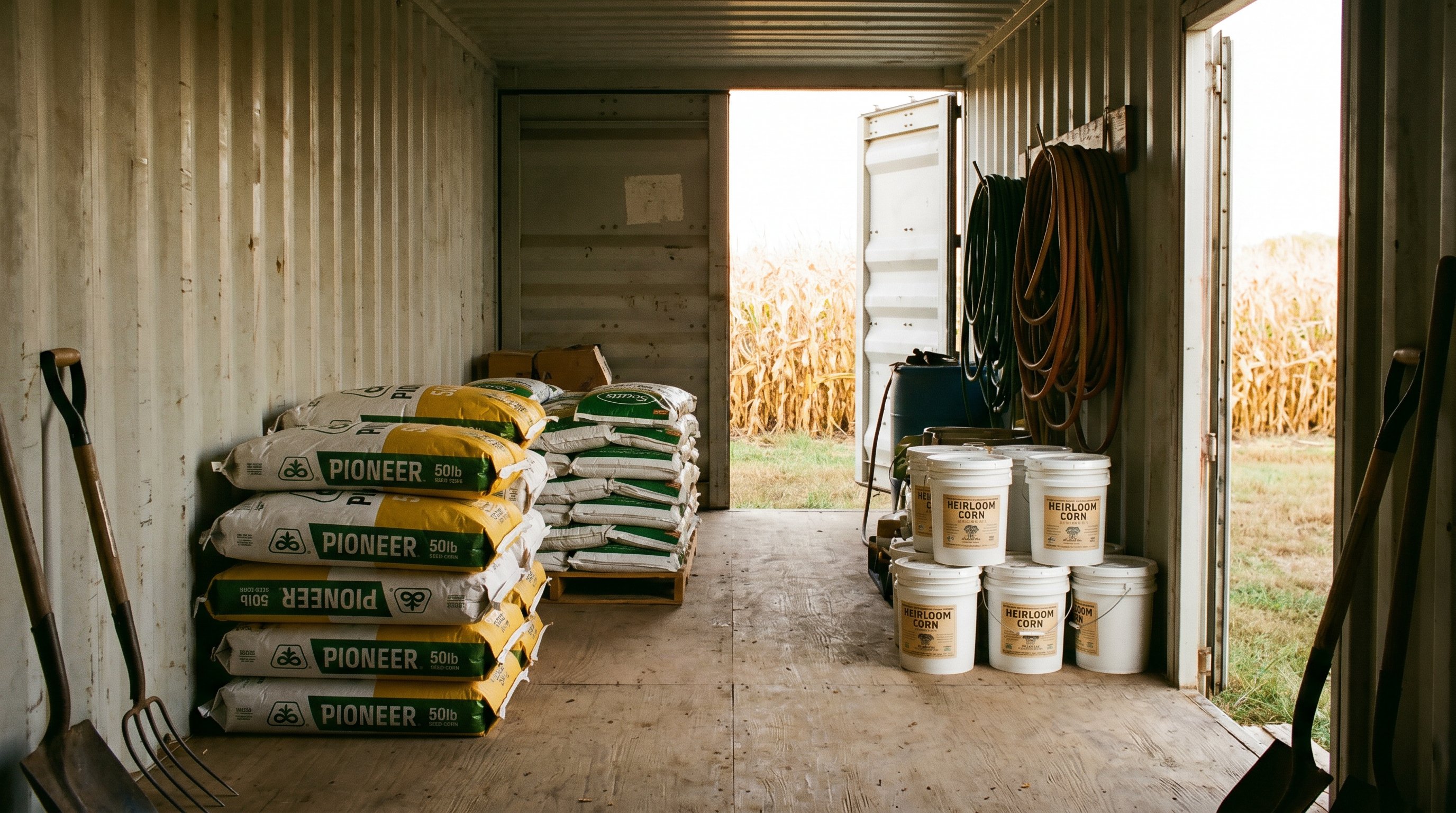
A 40ft used shipping container delivers rodent-proof, dry, lockable storage for seed, fertilizer, chemicals, implements, and harvested crops — with no pole-barn permit and no 90-day build cycle.
Why this fits.
- No permit in most ag zones
- Unincorporated agricultural counties typically exempt containers used for crop and equipment storage from accessory-structure permits. Pole barns do not get that treatment.
- Rodent + insect proof
- Sealed Corten steel with gasketed doors denies entry to mice, rats, and most crop-destroying insects. Critical for stored seed and feed.
- Chemical-safe storage
- Watertight construction contains spills from herbicides and fertilizers on the factory plywood floor. No groundwater contamination risk.
- Farm-bundle matched
- We source matched color and production-run containers for multi-unit installs. Two side-by-side 40fts from different runs look mismatched; our bundles do not.
The right starting point for agricultural & crop storage.
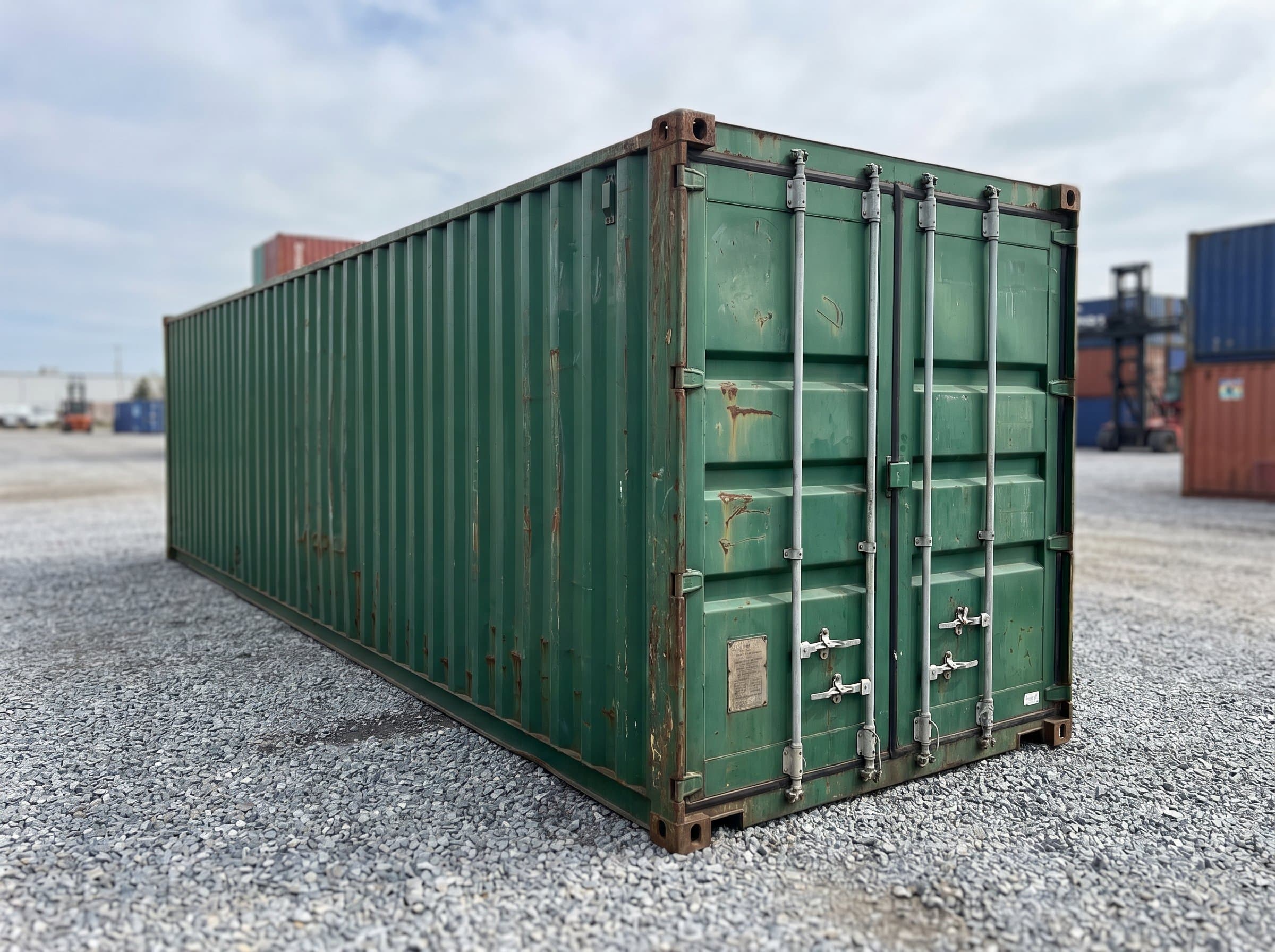
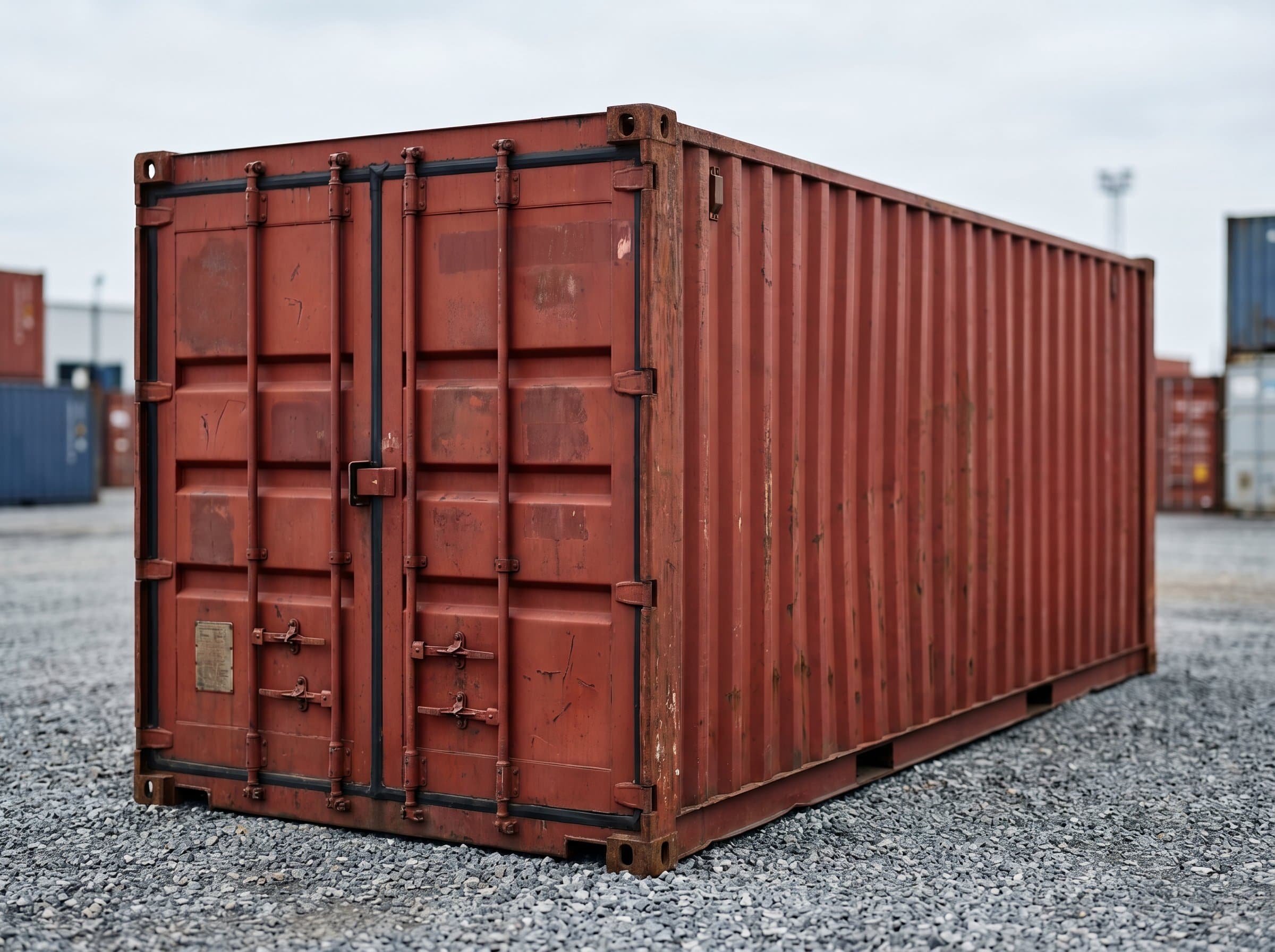
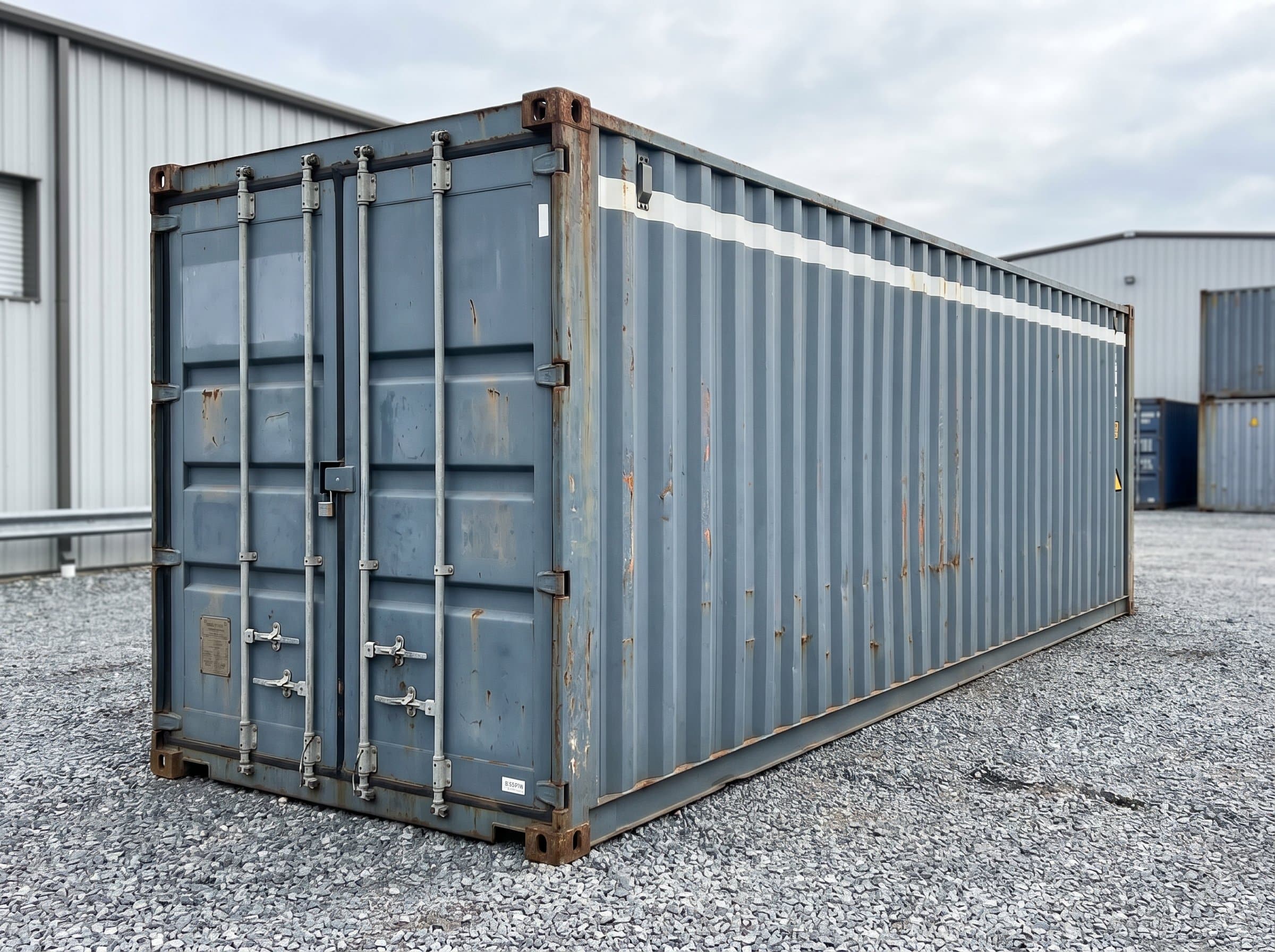
For row-crop farming, container storage has quietly replaced the pole barn as the default answer for seed, fertilizer, chemical, and equipment storage. A 40ft used container arrives on a flatbed, unloads in 15 minutes, locks tight the first day, and requires zero permits on most unincorporated agricultural parcels. For the price of a single 30x40 pole barn ($18,000–$35,000 retail), a farm can install 4–6 separate containers with specialized interior fit-out for seed vs. fertilizer vs. chemical vs. equipment — a much more modular and actually-useful storage infrastructure.
Who this is for on a working farm
Every row-crop operation we deliver to uses containers for at least one of the following:
- Seed storage — dry, rodent-proof, temperature-moderated storage for seed corn, soybeans, cotton, and other row-crop seed between delivery and planting.
- Fertilizer storage — bulk dry fertilizer, granular micronutrients, and lime.
- Chemical storage — herbicides, pesticides, fungicides in sealed plastic containers. Note: some jurisdictions require specific containment structures for agricultural chemicals — verify locally.
- Implement + equipment parts — replacement planter plates, harvester knives, sprayer nozzles, belts, chains.
- Hand tools + small equipment — chainsaws, torches, welders, small tractors, ATVs.
- Grain + harvested crop storage — sealed grain storage for on-farm holding before marketing.
- Irrigation supplies — drip tape, pvc fittings, pump parts, filter cartridges.
Many farms set up a “container row” of 3–6 matched 40fts in a dedicated yard area, each fit-out for a specific purpose.
Sizing: 40ft is the workhorse
| Size | Holds | Typical farm role |
|---|---|---|
| 20ft WWT | Small-equipment storage, specialty seed, chemical-only storage | Secondary support structure on a farm |
| 40ft WWT | Main seed + fertilizer + implement storage | Primary farm-yard storage workhorse |
| 40ft HC used | Same as 40ft with extra vertical for pallet stacking or overhead storage | Seed operations that stack seed-corn bags 4–5 high |
| Matched bundle of 3–6x 40ft | Dedicated storage per category (seed / fertilizer / chemical / parts / equipment) | Large row-crop operations, co-op storage |
Farms rarely buy a single container and stop. Most operations end up with 3–4 containers within the first 18 months as they realize how useful compartmentalized storage is for organizing the farm.
Grade: WWT is standard, CWO for chemical storage
For general ag storage, used WWT is the correct spec. For sealed chemical containment, consider CWO for the extra assurance that the container is certified watertight:
- WWT ships with minor surface rust and cosmetic dents. Completely functional for dry seed, fertilizer, implement, and equipment storage.
- CWO (Cargo-Worthy) is a small premium (~$400–$600) for a container that has been recently inspected as cargo-ready. Worth it for sealed chemical storage or if you are in a coastal/humid region where rust is an accelerated concern.
- One-trip is overkill for agricultural storage unless the container will serve as a visible farm-stand retail footprint or branded ag-tourism kitchen.
Cost: what ag-storage containers actually run
A realistic budget for a 40ft WWT agricultural storage container, delivered and fit-out:
- Container (40ft WWT, delivered to ag address): $3,400–$4,600.
- 20ft WWT, delivered: $2,800–$3,400.
- Ground prep (gravel pad or 4 railroad ties under corners): $150–$800.
- Ventilation (4 louver vents, 2 high + 2 low): $250–$600.
- Roof insulation (2in closed-cell spray foam ceiling — drops interior summer temp by 20–30°F): $1,800–$3,000.
- Interior shelving + pallet racks: $400–$2,000.
- Man-door cut-and-frame (optional, for daily access without opening the big cargo doors): $1,200–$2,500.
- Lockbox + hardened padlock upgrade: $100–$250.
- Tie-down anchors (tornado belt): $200–$500.
- Seed-bin or feed-bin interior build-out: $600–$2,500 per bin.
All-in for a single general-purpose 40ft storage container: $3,800–$7,500.
For a specialized seed-storage container with insulation + climate monitoring: $5,500–$9,500.
Compare to a 30x40 pole barn at $18,000–$35,000 retail and you immediately see why container storage has become the default.
Permits: the ag exemption is the headline
Most unincorporated US agricultural counties exempt containers used for farm purposes from accessory-structure permits entirely. This is the single biggest reason containers have replaced pole barns for small-to-medium farm storage.
Typical rules, county by county:
- Unincorporated ag-zoned parcels: no permit required, no setback variance, no property-tax reassessment.
- Agricultural-use exemption: must be used for bona fide ag purposes. Most counties interpret this broadly — seed storage, equipment storage, feed storage, chemical storage all qualify.
- Structure-count limits: some counties limit the number of accessory structures per parcel. Usually generous for parcels over 10 acres.
- Setback rules: apply even to exempt structures. Typically 10–25ft from property lines.
- Environmental rules for chemical storage: some states require secondary containment for pesticide/herbicide storage. Verify state-level pesticide handling regs.
Verify with the county assessor’s office before ordering the first container. Providing your parcel number and confirming “ag-use exempt for container storage” in writing is the best move.
Specialized fit-outs by category
Seed storage
- Roof-mounted closed-cell spray foam (drops summer peak by 20–30°F).
- 4 louver vents for cross-flow.
- Pallet racks rated for 4–5 high seed-corn bag stacks.
- Optional: wireless temperature + humidity monitor with cell-connected alerts.
Fertilizer storage
- Aggressive ventilation (6+ vents) for chemical off-gassing.
- Interior epoxy coating on the plywood floor to prevent fertilizer absorption.
- Secondary containment tray under bulk fertilizer piles.
- Grounded lightning rod if storing ammonium nitrate-based fertilizers (specific code requirement in some states).
Chemical (herbicide/pesticide) storage
- Sealed floor (painted epoxy or bolted-in poly liner).
- Exterior-vented ventilation with chemical-compatible components.
- Fire extinguisher rated for the specific chemicals stored.
- Compliant signage (OSHA + EPA required for many substances).
- Secondary containment meeting state pesticide handling regs.
Implement + equipment parts
- Standard shelving, pallet racks, peg-board.
- Bright LED lighting (equipment parts are inventory — you need to find things).
- Climate control not required.
Harvested grain
- Sealed gasket upgrade on doors.
- Interior moisture barrier.
- Built-in aeration tubing for low-moisture holding.
- Note: most farms use dedicated grain bins for bulk grain, not containers. Container grain storage is best for specialty grains, organic segregation, or temporary holding.
Matched farm bundles
For operations buying 3+ containers at once, we source matched production runs. The difference is visible: two 40fts from the same run look like one continuous structure side-by-side, while two 40fts from different runs show color variation and corrugation-profile differences from 200 feet away. Tell us up front that you need a matched bundle.
Typical multi-container farm bundles:
- 3x 40ft WWT (seed + fertilizer + implements): ~$10,000–$14,000 delivered.
- 5x 40ft WWT (full compartmentalized storage row): ~$17,000–$23,000 delivered.
- Add matched 20ft support units (chemical locker, workshop, office): $2,800–$3,400 each.
Common mistakes
- Not ventilating for fertilizer or seed. Condensation ruins both. Vent aggressively.
- Storing chemicals without secondary containment. Most states require secondary containment for pesticide storage. Verify state-level rules before your first delivery.
- Buying single units instead of matched bundles. Mismatched side-by-side containers look unprofessional and detract from resale value.
- Placing on sod. Rots the floor boundary zone. Gravel pad or railroad ties is the bulletproof play.
- Skipping the tornado anchor. An empty 40ft container weighs 8,000 lbs and is wind-mobile in 70mph straight-line winds. Strap it.
What agricultural & crop storage buyers tell us after delivery.
Switched from pole barn builds to a matched 4-container farm bundle. Seed, fertilizer, chemical, implement — each in its own dedicated unit. Organized the whole yard and saved $15k vs. building another pole barn.
Needed sealed chemical storage for organic-compliance reasons. One 20ft used container, epoxy-coated interior, secondary containment tray. Passed organic inspection first try and cost me a fraction of a compliant chemical shed.
Three matched 40ft HCs for seed storage, closed-cell foam ceiling, pallet racks, wireless temp/humidity monitors. Lost zero seed corn to moisture this year vs. 4% loss in my old pole barn.
Questions we get on every quote.
Other use cases
We’ll text you back within 1 business hour.
Share your ZIP and what you’re building. We’ll send a written quote with the delivered, all-in number, or tell you where to buy cheaper if we can’t beat it.
Agricultural & Crop Storage guide last reviewed .