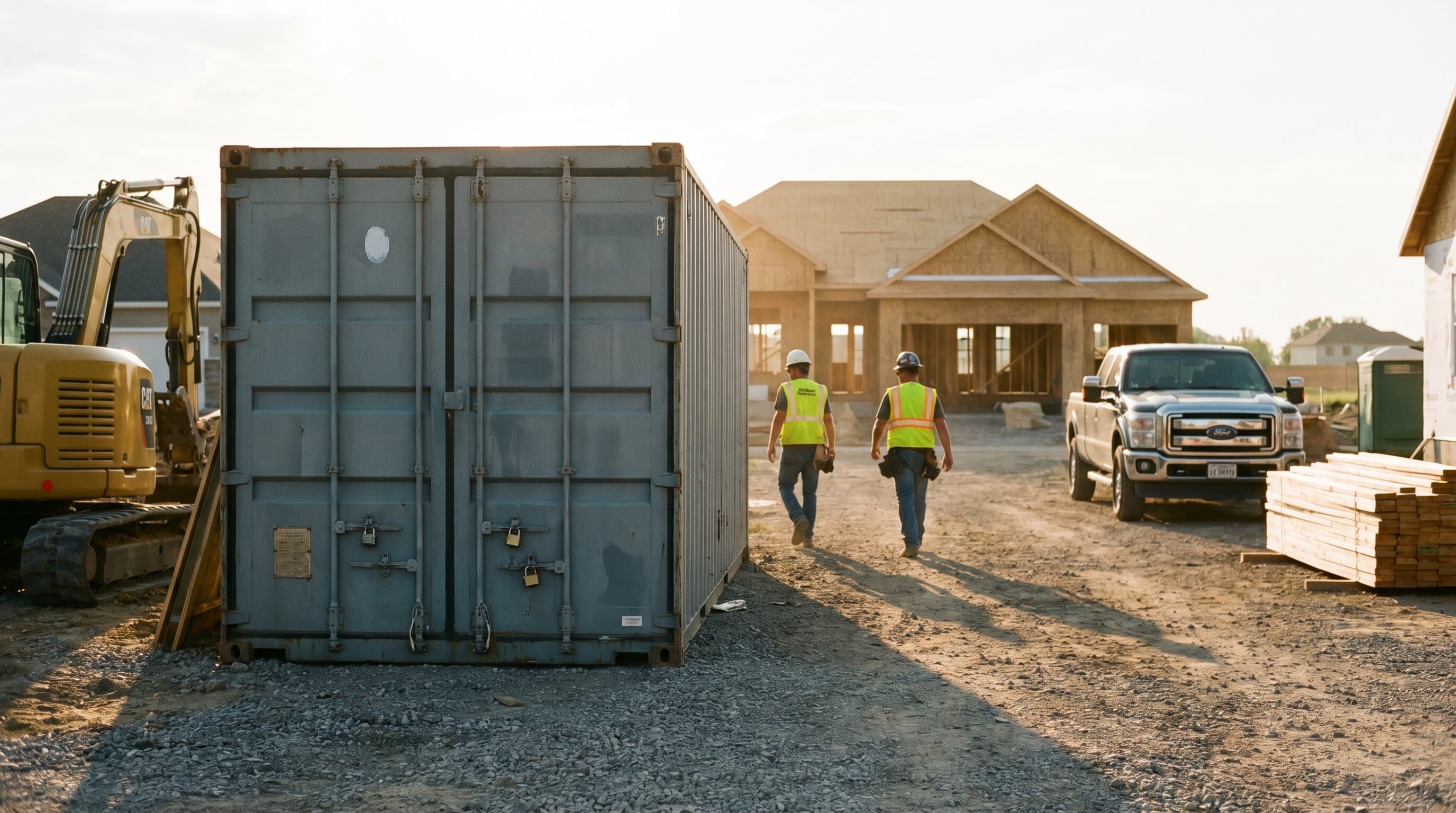
Job-site container storage that shows up on the first try.
Wind-and-watertight steel boxes, tilt-bed delivered, priced before you call.
Why this fits.
- Tilt-bed delivery
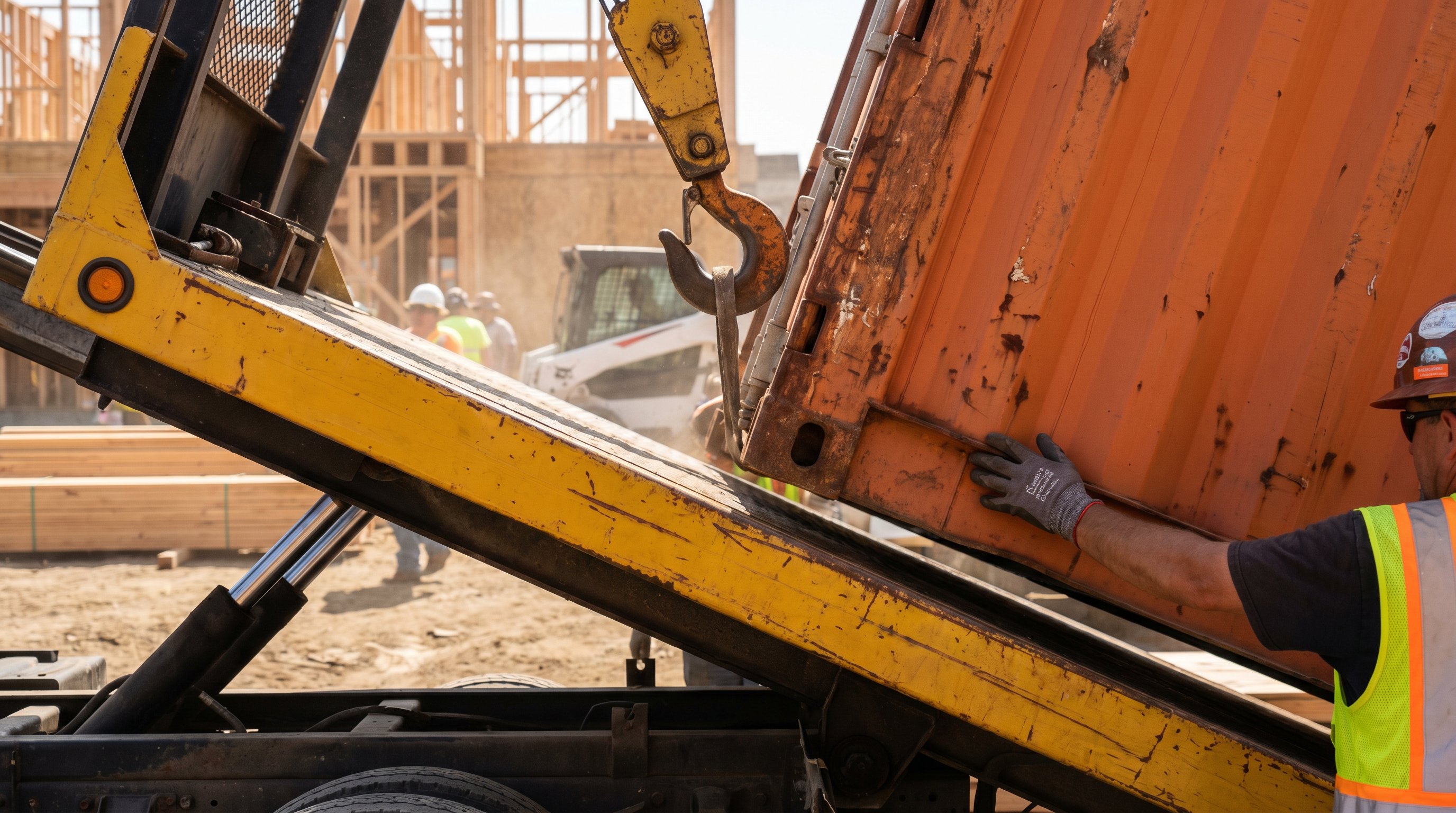
- Container comes off the truck in 15 minutes. No crane, no forklift.
- CWO / WWT grade
- Cargo-worthy or wind-and-watertight used boxes — the working standard for construction.
- Security
- Lockbox-mounted double doors. Optional padlock + crossbar hardware.
- Deliver-to-ZIP pricing
- Price includes delivery to your job-site. No surprise fuel or mileage upcharge.
The right starting point for construction site storage.
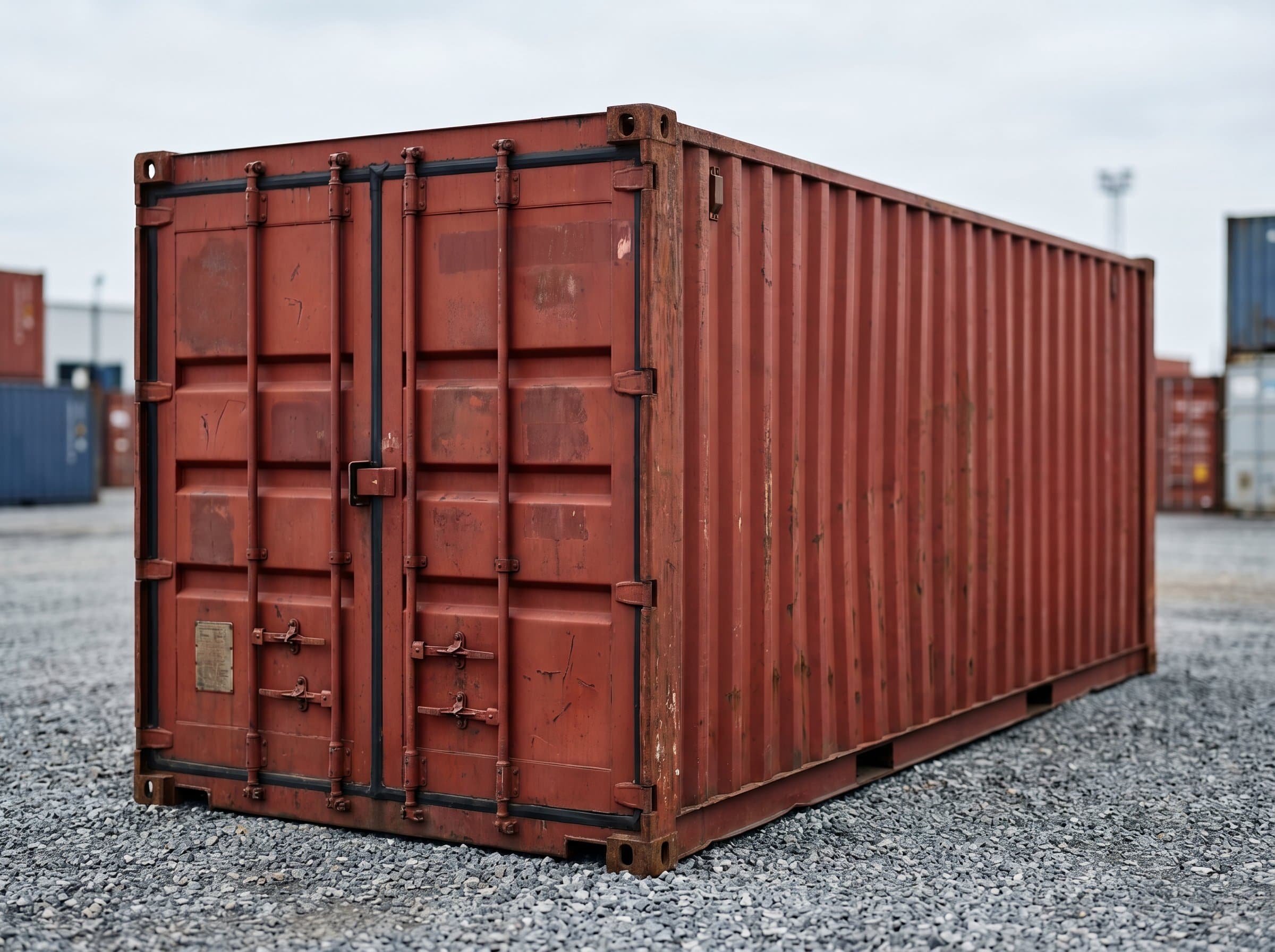
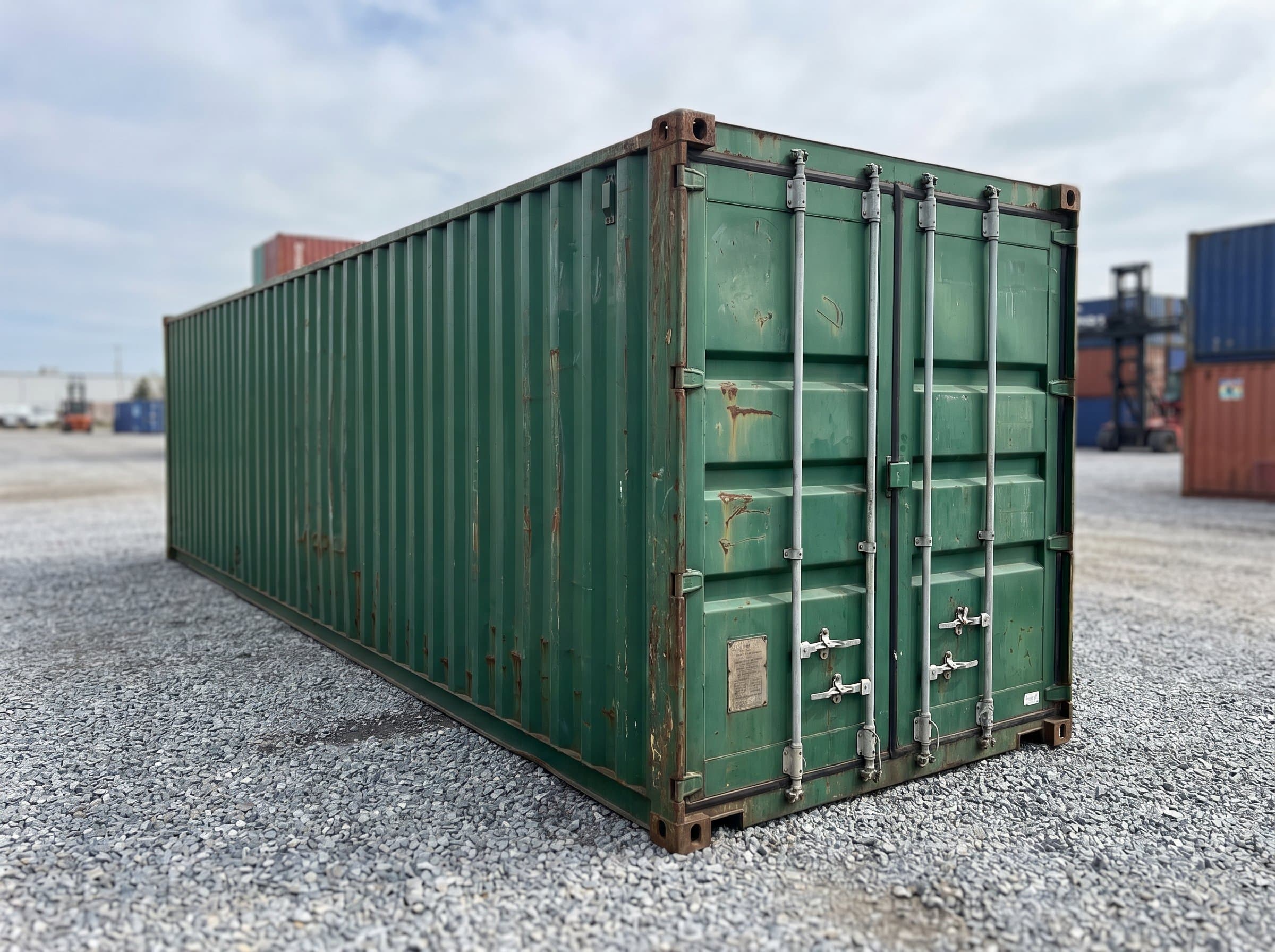
On an active job-site, a shipping container is the single most useful piece of infrastructure that is not a pickup truck. It is a locked, dry, weather-proof tool-and-material box that shows up on a flatbed, drops in fifteen minutes, moves to the next project when you are done, and outlives the crew trucks three-to-one. Unlike a portable job-box rental, it is yours — so the monthly cost is zero after the first year, and when the project is over you either move it to the next site or sell it for 60–80% of what you paid.
Who buys construction-site containers
The regulars we deliver to every week:
- General contractors staging multi-phase residential and light-commercial projects.
- Framers, roofers, electricians, plumbers, and HVAC trades who roll their own materials and do not want to haul tools every night.
- Site supers on large commercial builds running a centralized tool crib for the subcontractor rotation.
- Remodelers who need temporary on-site storage for a kitchen or bath tear-out while the owner still lives in the house.
- Utility crews running long-duration line, fiber, or pipeline projects where the crew relocates every 2–3 weeks.
If you have ever paid for a rental tool-box from a portable storage company for more than 6 months, owning a container is already cheaper.
Sizing: 20ft vs 40ft for construction
| Size | Best for | Rule of thumb |
|---|---|---|
| 20ft | Residential sites, small GC crews, single-trade operations | If the whole crew is 2–4 people, 20ft is plenty. |
| 40ft | Commercial builds, multi-trade GC operations, long-duration projects | If you are staging materials for more than one trade, go 40ft. |
| 40ft high-cube | Same as 40ft but with extra vertical height | Only worth it if you are storing tall items (lift masts, scaffolding, ladders vertical). |
Most residential GCs are fine with a 20ft. Most commercial GCs want the 40ft.
Grade: WWT or CWO, skip one-trip
For construction, you do not need cosmetic perfection. The container is going to get muddy, scratched, stickered up, and occasionally nudged by a loader. Order WWT or CWO and save the $2,000 versus one-trip.
- WWT (Wind & Watertight) is the workhorse grade for 70% of our construction deliveries. Doors seal, roof is dry, walls are solid.
- CWO (Cargo-Worthy) is a small step up — useful if you want to resell the container at the end of the project (CWO boxes command a slightly higher resale price).
- Skip New / One-Trip for construction unless the container will be branded and serve as a visible client-facing office on-site. At that point, consider ordering a proper one-trip with a windowed man-door and paint it in company colors.
Cost breakdown for a construction-ready container
- Container: $2,800–$4,600 delivered for a 20ft–40ft WWT/CWO.
- Tie-down or anchoring: $150–$400 for ratcheting tie-down straps to ground anchors. Required on many commercial sites and in coastal wind zones.
- Man-door + window cutout (optional): $1,800–$3,200 if you want a secondary personnel door and a window. Most GCs skip this and use the big cargo doors.
- Lockbox + crossbar upgrade: $150–$300 if the used unit does not ship with one. Hardened padlock on top of that, $45–$110.
- Shelving + tool-rack build-out: $300–$900 for steel L-rack on both long walls plus peg-board panels.
- Portable lighting + generator hookup (optional): $200–$600 if the site does not have power.
Expect $3,500–$7,000 all-in for a deliverable, lockable, shelved container ready to hold your tools.
Delivery: what to expect on a live job-site
- Access check: we need roughly 80ft of straight-in clearance and 12–14ft of vertical for the tilt-bed. The trailer does not have to be within 10ft of the final spot, but straight approach matters most. If you are working on a tight urban lot, we can arrange crane delivery for an extra fee.
- Ground condition: firm, level ground under the corners. Mud and soft fill will swallow the corners and bind the doors. A few railroad ties or concrete deck blocks under each corner casting is the bulletproof play.
- Tilt-bed in, slide off, done. 15–20 minutes on-site. Driver stays until you confirm placement.
- Repositioning: any tilt-bed or roll-off trucker can move the container between sites for the price of a round-trip. We can also arrange this in most metros.
Permits and municipal rules (what usually applies)
- Active construction job-sites: almost never require a permit for a temporary container. The container is considered a construction-phase accessory structure and is permitted implicitly by the building permit.
- Right-of-way or public parking staging: usually requires a temporary encroachment permit from the municipality. Your GC or site super typically pulls this.
- HOA-governed residential sites: some HOAs prohibit containers visible from the street even during active construction. Confirm with the HOA before scheduling delivery — we can send you a pre-call PDF template.
- Long-duration placement (12+ months): some jurisdictions will re-classify the container as a permanent accessory structure and require a building permit after a defined period. Read our delivery cost and permit guide for specifics.
Common mistakes
- Under-sizing. GCs new to containers often buy a 20ft and outgrow it inside a month. If you have more than one trade staging tools, go 40ft.
- Skipping the anchor. A 40ft empty container weighs ~8,000 lbs and is surprisingly wind-mobile. In coastal or high-plains wind zones, strap it.
- Placing on soft fill. Fresh construction fill is the worst possible ground condition for a container. The corners sink unevenly, the doors bind, and you have a $600 door re-hang bill by season two.
- Not labeling the keys. Multiple 20ft containers on the same site with lookalike padlocks is a real operational headache. Key-alike the locks or color-code them.
Resale and second-life options
A used container holds 60–80% of its delivered price for 15+ years of service life. When a project ends, your options are:
- Move it to the next job (cheapest — any tilt-bed will do it).
- Sell it locally to another contractor or a homeowner (Craigslist + trade Facebook groups work well; expect to recover 60–80%).
- Sell it back to a depot (faster, lower price — typically 40–55% of what you paid).
Most GCs who buy one end up buying two within 18 months. The math is that favorable.
What construction site storage buyers tell us after delivery.
I have rented tool-boxes for 12 years. Bought a used 40ft from these guys last spring. Paid for itself in 8 months and it is going to outlive my truck.
Needed a lockable staging box for a gut-to-studs kitchen reno while the family was still in the house. Delivered on the Monday we tore out cabinets, kept everything dry for 9 weeks.
Bought three used 20ft containers over 2 years. Two are on active jobs right now, one is in my yard as winter tool storage. Dead-on delivered pricing every time.
Questions we get on every quote.
Keep researching construction site storage.
Long-form guides written by our own sourcing team. No fluff, no affiliate spam, just the stuff we tell people on the phone every week.
Short answer: sometimes, but almost never the unit you want. What the under-$1,000 listings actually are, and what a real entry-level container costs delivered.
A plain-English walkthrough of the four grades you will see on any container listing (New/One-Trip, CW, WWT, As-Is), what each means for your project, and when to pay more.
The delivery line item is where most container purchases blow up. Here is the math behind tilt-bed, flatbed, and crane delivery so you can budget before you quote.
Other use cases
We’ll text you back within 1 business hour.
Share your ZIP and what you’re building. We’ll send a written quote with the delivered, all-in number, or tell you where to buy cheaper if we can’t beat it.
Construction Site Storage guide last reviewed .