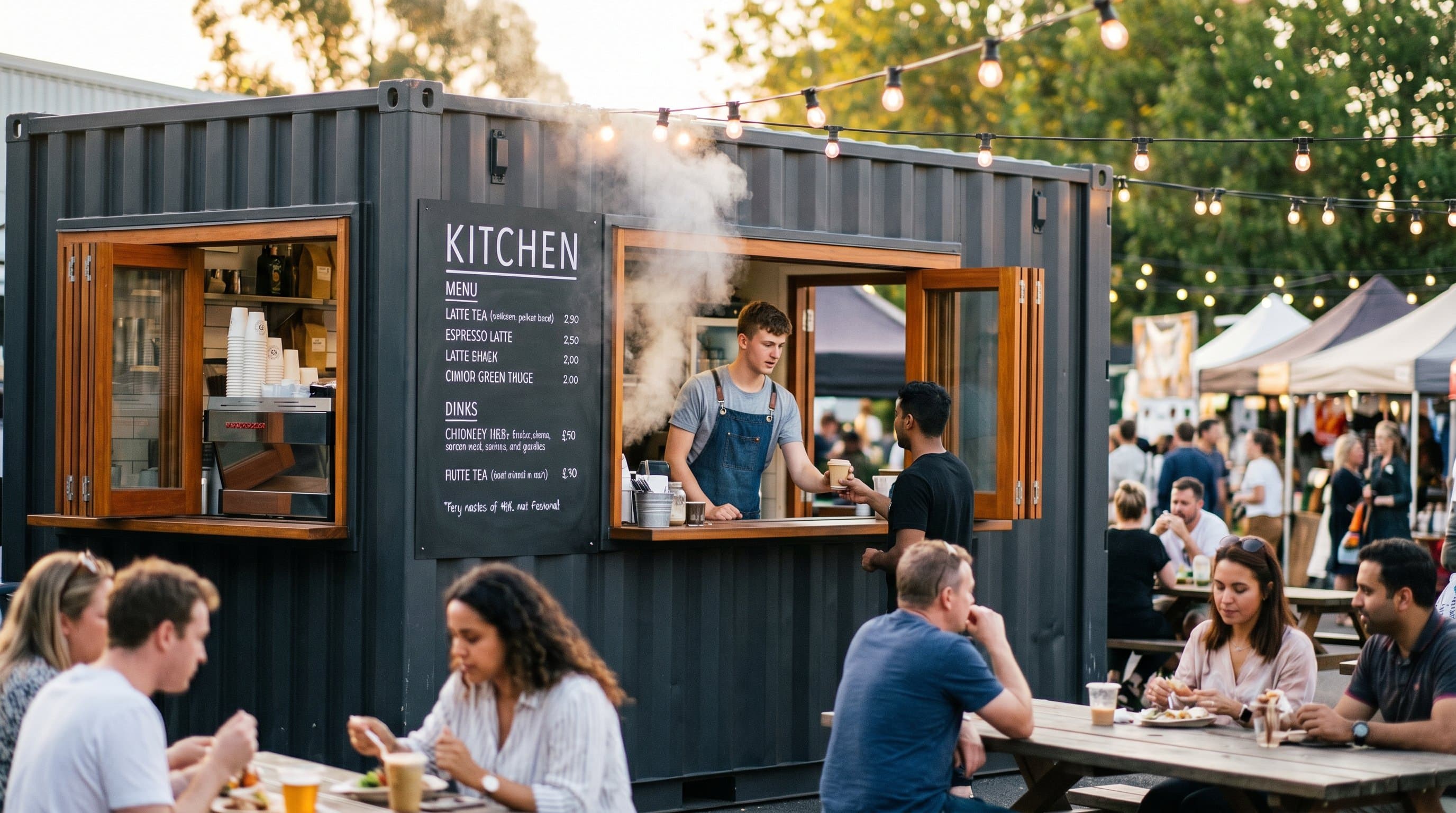
A restaurant that opens in 90 days, not 18 months.
A modified 20ft or 40ft one-trip shipping container is the fastest permit-friendly path to opening a counter-service concept, a coffee shop, a craft-cocktail bar, or a full takeout kitchen.
Why this fits.
- 90-day open
- Container F&B concepts typically go from deposit to serving customers in 10–16 weeks — a fraction of a traditional restaurant buildout timeline.
- Permit-friendly
- Most jurisdictions classify a container kitchen as a temporary or mobile structure, which sidesteps the full commercial-building code pathway.
- Brand-ready canvas
- A one-trip steel shell paints cleanly, wraps cleanly, and photographs beautifully. Every shop is an Instagram-grade brand moment.
- Movable
- Lease up? Tilt-bed it onto the next location. Traditional restaurants are trapped in the real estate; container concepts are not.
The right starting point for restaurants & food service.
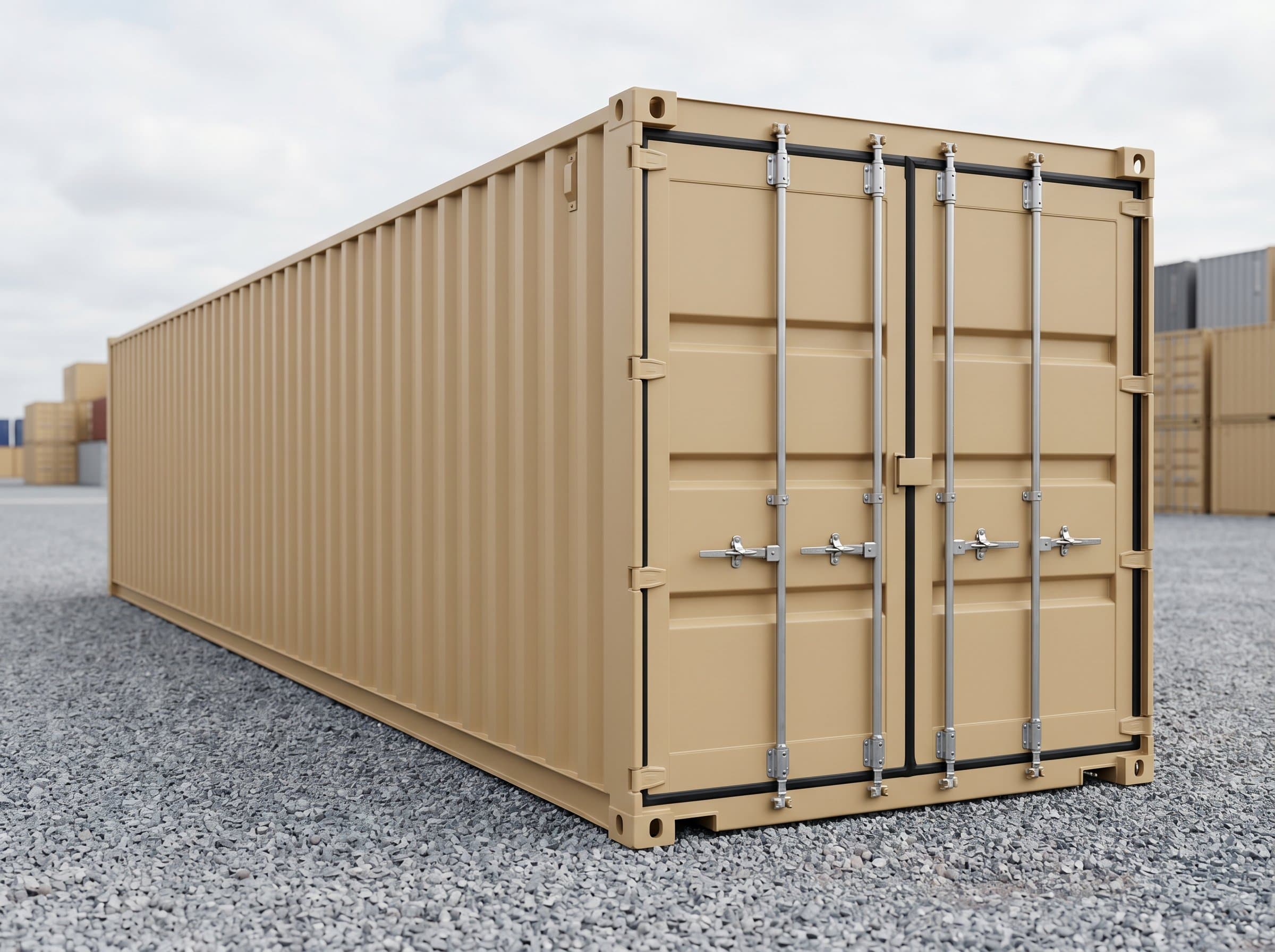
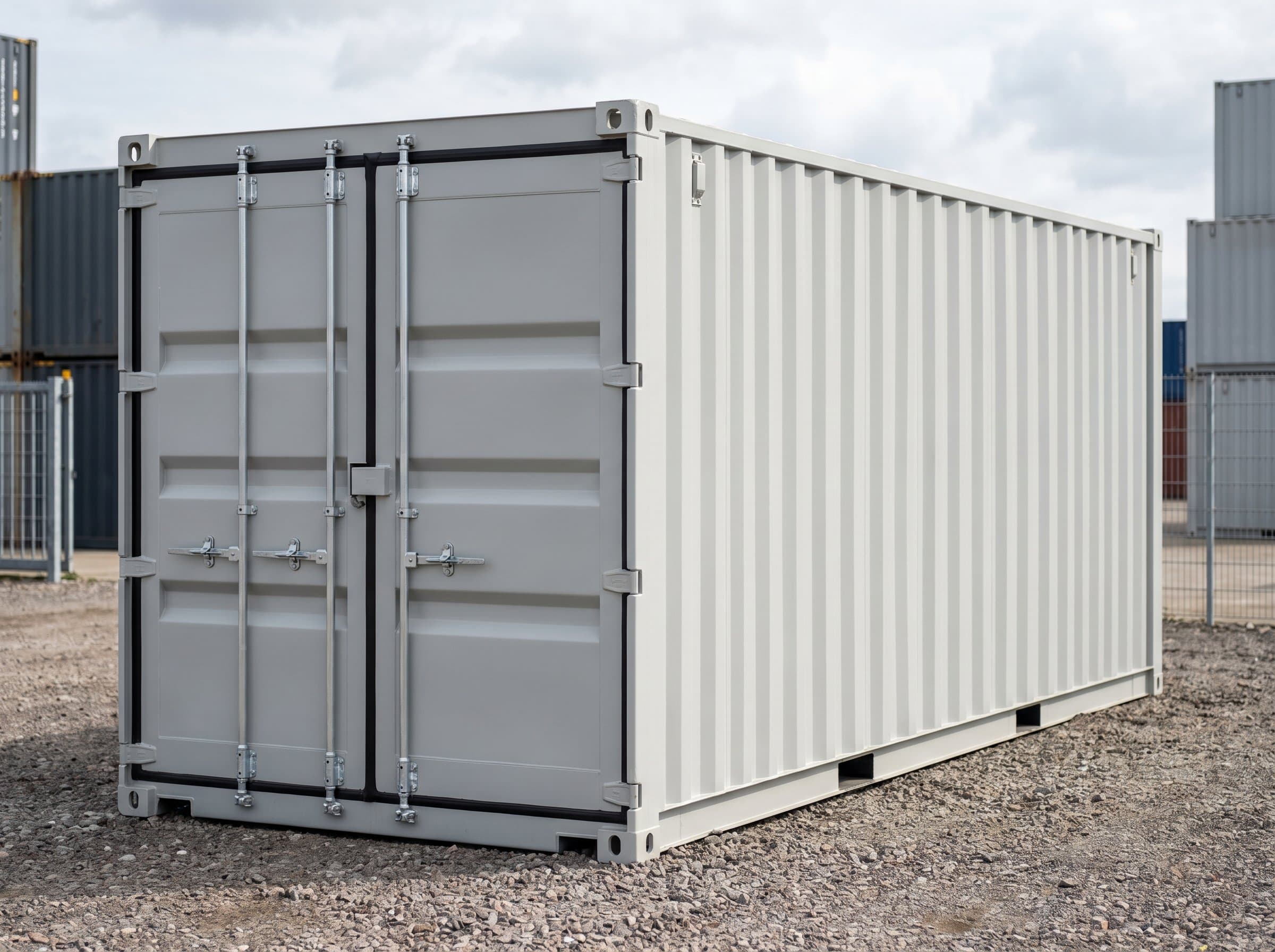
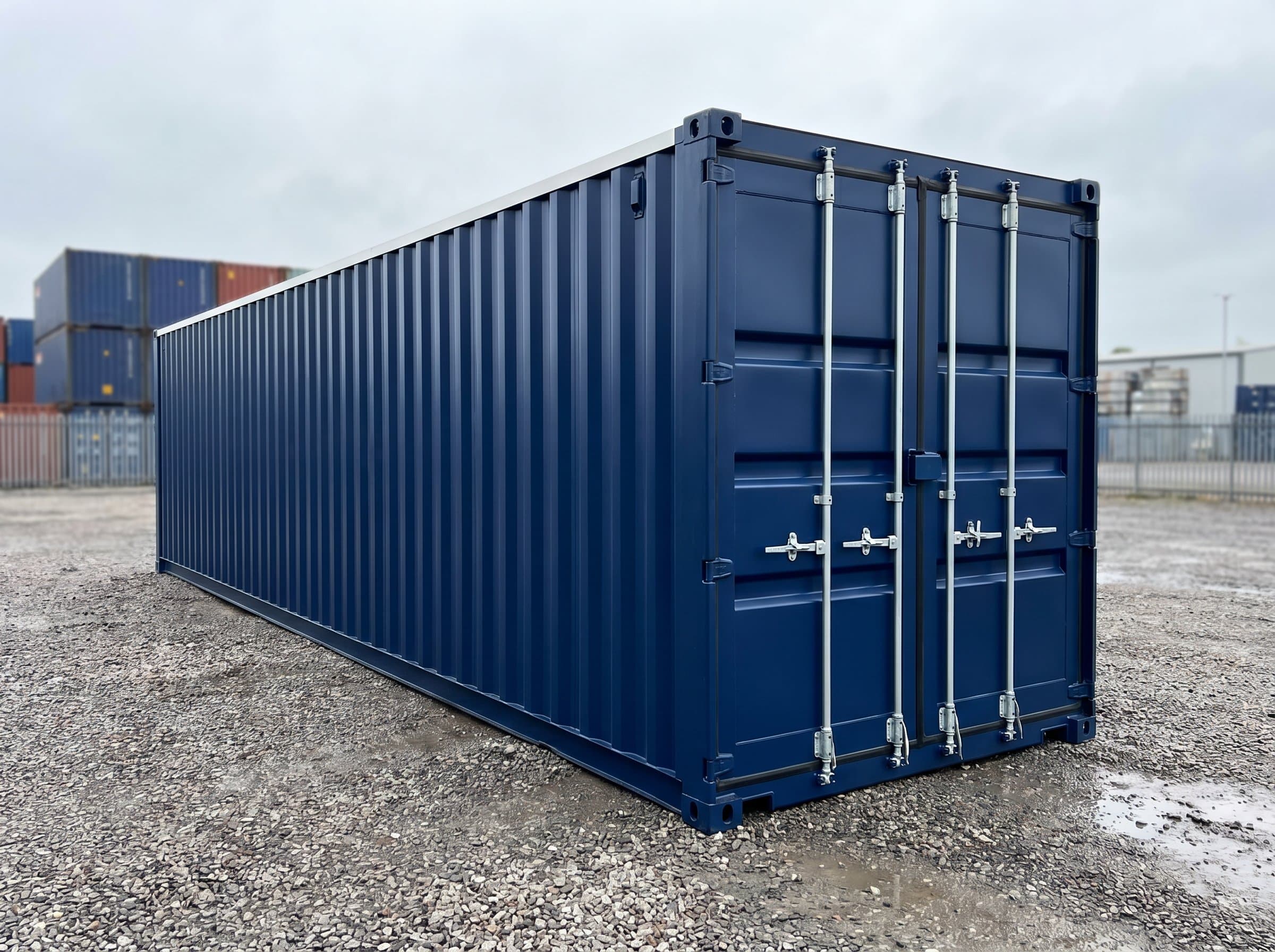
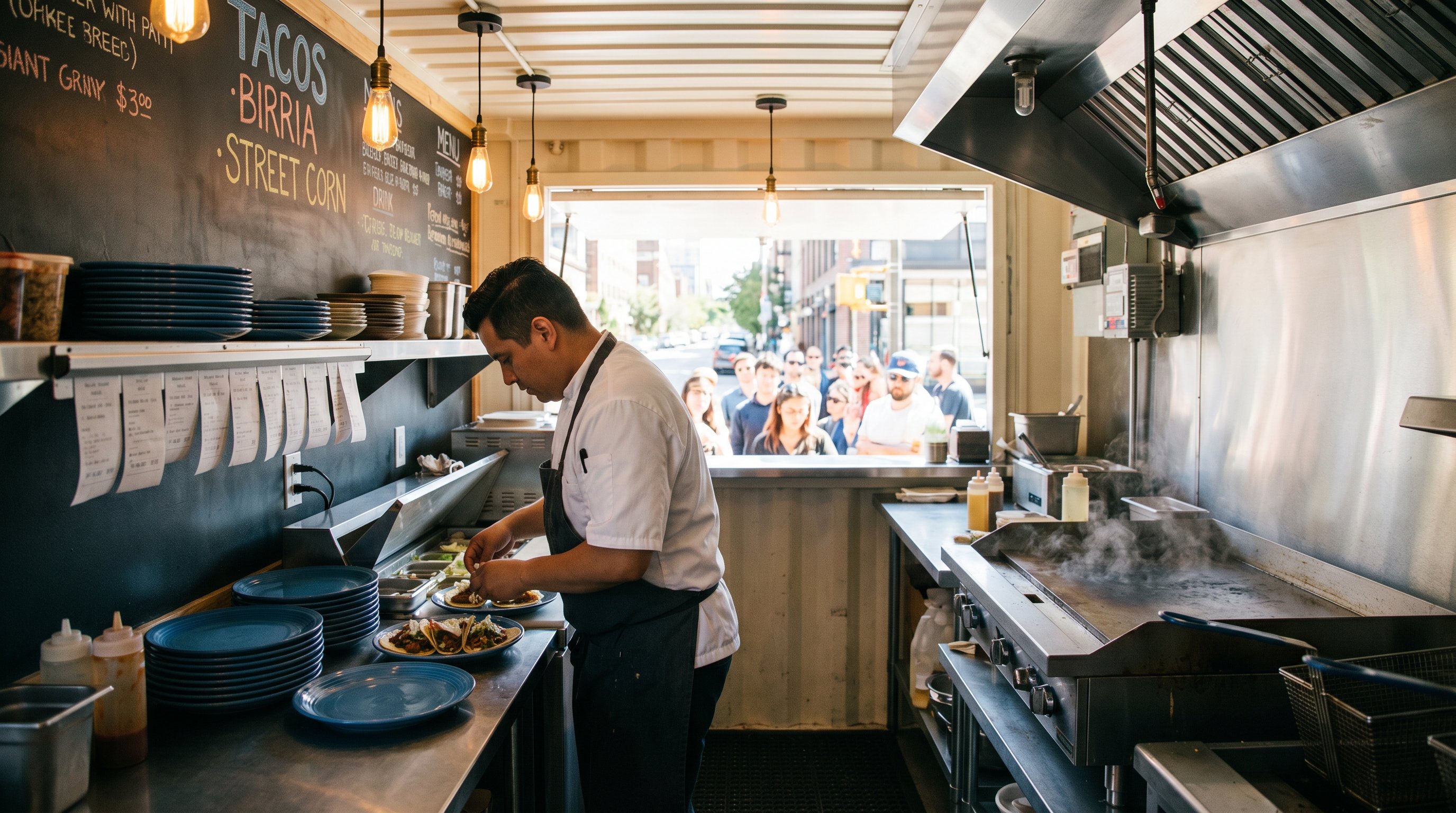
A modified shipping container is one of the most cost-efficient ways to open a food-and-beverage concept in America today. Container F&B strips out the three slowest phases of a traditional restaurant opening — structural buildout, permitting, and landlord negotiations — and compresses them into a 10–16 week prefab cycle. For coffee shops, cocktail bars, takeout kitchens, ice-cream concepts, and small full-menu operations, it has quietly become the default path for first-time restaurant owners and fast-scaling brands alike.
Who is opening container restaurants
The concepts we deliver for, in order of frequency:
- Coffee + espresso bars — single-operator counter-service shops with a pass-through window and an outdoor patio.
- Craft cocktail + natural wine bars — seasonal or year-round small-format bars in breweries, outdoor plazas, and hotel courtyards.
- Takeout + fast-casual kitchens — tacos, burgers, bowls, noodles, pizza — with a service window and walk-up only.
- Ice cream, juice, and grab-and-go — single-product concepts that do not need a full kitchen.
- Food-hall tenants — modular container kiosks inside a larger food-hall shell.
- Ghost kitchen delivery prep — full-kitchen containers operating as delivery-only commissaries.
Container F&B is a bad fit for sit-down restaurants with a traditional front-of-house experience, concepts needing more than 12 seats, or any operation requiring a Type I hood with extensive ducting through a permanent roof.
Sizing: matching the concept to the box
| Size | Floor area | Works for |
|---|---|---|
| 20ft one-trip | ~160 sqft | Coffee counter, cocktail bar, single-product shop, grab-and-go. |
| 40ft one-trip | ~320 sqft | Full takeout kitchen with cold line + hot line + prep, or a small full-service bar. |
| 40ft HC one-trip | ~340 sqft + taller ceiling | Same as 40ft but with room for a Type II vented hood, overhead ticket rail, taller cold-line refrigeration. |
| 2x 40ft HC (side by side or stacked) | 640 sqft | Full restaurant kitchen + front-of-house counter + walk-in cooler. |
Most first-time container F&B operators land on a 20ft for beverage concepts and a 40ft HC for food concepts. The HC upgrade on food containers is almost always worth it because hood ductwork and ticket rails consume real vertical space.
Grade: one-trip only
For food service, a one-trip container is non-negotiable. Three reasons:
- Sanitation and regulatory. Health departments inspect your container as a food-contact environment. A used box with patched rust, residual cargo odor, or floor staining will struggle through inspection. A one-trip is factory-clean and inspection-ready.
- Interior finish quality. Stainless counters, FRP wall panels, commercial flooring — all of these install cleaner and faster on a clean, square one-trip shell.
- Brand and photography. Your container will be photographed thousands of times over its service life. One-trip looks premium; used looks distressed.
Cost: what a container restaurant actually runs
A realistic all-in budget for a 40ft HC one-trip takeout kitchen (fast-casual concept):
- Container (40ft HC one-trip, delivered): $6,400–$7,800.
- Plumbing (3-comp sink + handwash + prep sink + floor drain + water heater): $8,000–$14,000.
- Electrical (200A sub-panel, hood circuits, equipment outlets, lighting): $6,000–$12,000.
- HVAC + Type I or II hood + fire suppression: $8,000–$18,000.
- Insulation + FRP wall panels + commercial flooring: $4,500–$8,000.
- Serving window + door cut-and-frame: $3,000–$6,000.
- Exterior paint or vinyl wrap: $1,500–$4,500.
- Interior millwork (counter, shelving, cabinets, POS station): $6,000–$15,000.
- Equipment (flat-top, fryer, ranges, walk-in cooler, prep tables, ice machine, POS, etc.): $20,000–$80,000 by concept.
- Permitting + health department + plan check: $2,000–$8,000.
All-in (fast-casual takeout concept, one 40ft HC): $65,000–$150,000, plus equipment. Compare to a traditional storefront restaurant buildout at $250,000–$900,000 and you see why container F&B is the preferred path for first-time operators.
Simpler concepts scale down proportionally. A 20ft coffee container with counter service runs $35,000–$75,000 all-in including espresso equipment.
Permits: the mobile-structure classification, revisited
Container F&B lives in a specific regulatory gray zone that — when navigated well — is dramatically more permissive than traditional restaurant permitting.
The usual path:
- Zoning. The parcel must permit retail food service. Confirm at the city level.
- Temporary use permit. Most jurisdictions issue a 12–24 month renewable permit for a mobile food-service container. This is cheaper and faster than full commercial building permitting.
- Health department plan review. The container must meet the health code of the jurisdiction — this is where most of the regulatory complexity lives. Expect 2–6 weeks for plan review. Every jurisdiction is different; some allow FRP wall panels, some require stainless. Some allow 3-comp sinks, some require 4-comp. Hire a local F&B permit-expediter for your first concept.
- Building + electrical + plumbing inspections. Same as any other permanent install.
- Business license + food handler certifications.
- Liquor license (if applicable). Unrelated to structure type — state-level process, typically 60–180 days.
The key: keep the container on a non-permanent foundation (deck blocks or tie-down anchors) to maintain the temporary/mobile structure classification. A poured concrete slab re-classifies the whole project as a permanent restaurant, triggering full commercial building code.
Hood and ventilation: the one thing people get wrong
The single most complex part of a container F&B buildout is the commercial hood. Two categories:
- Type I hood (grease-laden vapors — flat-top, fryer, grill, wok). Required by IMC for any cooking surface that produces grease vapor. Requires a fire-suppression system (Ansul), make-up air, and full hood ductwork exiting the container roof. Budget $12,000–$25,000 for hood + suppression + ducting + permits. This is the single biggest line item after the container itself.
- Type II hood (heat and steam only — ovens, dishwashers, steamers). Much simpler, cheaper, and often installable without roof penetration.
Many first-time container F&B operators design around Type II hoods by avoiding fryers and grills — pizza ovens, combi-ovens, induction ranges all work without Type I. This single design decision can save $15,000–$20,000 on the buildout.
Timeline: from deposit to first pour
- Week 0–2: concept finalized, site selected, zoning confirmed.
- Week 2–5: health department plan review submitted.
- Week 4: container ordered, depot confirms.
- Week 6: container delivered, placed.
- Week 6–10: plumbing, electrical, HVAC/hood rough-in.
- Week 10–14: finishes (flooring, FRP, millwork, equipment install).
- Week 14–16: inspections (electrical, plumbing, health, fire).
- Week 16–18: soft open, staff training.
Most container F&B concepts go from deposit to grand opening in 12–20 weeks.
Common mistakes
- Buying used to save money. Health department will pay more attention. Every dollar saved becomes two dollars of delay.
- Designing around a Type I hood when you do not need one. If induction or combi-oven or pizza oven works for your concept, use them and skip the $20,000 Type I hood.
- Permanent foundation. Re-classifies the project as a commercial building, triggering full building code. Stick to deck blocks or tie-downs.
- Under-sized electrical. A full F&B kitchen with hood, walk-in, and equipment easily pulls 150–200A. Do not undersize the panel.
- Skipping the grease trap. Most health departments require a sized grease trap for fryers and flat-tops. Factor it into plumbing design up front.
- Winging the plan review. Hire a local F&B permit-expediter. Worth every dollar for the first concept.
What restaurants & food service buyers tell us after delivery.
Opened our second location as a 20ft one-trip container next to a brewery. Signed the lease on a Monday, serving drip coffee 8 weeks later. My landlord-expediter friends said it would take 9 months for a traditional storefront.
40ft HC one-trip with a full Type II hood, flat-top, cold line, and hand-wash. Passed health department first inspection. Would have spent $400k+ on a traditional brick-and-mortar; did it for $110k all-in with this container.
Built a craft wine bar inside a 20ft one-trip in a rooftop plaza. Cedar-paneled interior, refrigerated glassware display, a back bar that fits 60 bottles. Our Instagram grew from zero to 8k followers in six months on this container alone.
Questions we get on every quote.
Other use cases
We’ll text you back within 1 business hour.
Share your ZIP and what you’re building. We’ll send a written quote with the delivered, all-in number, or tell you where to buy cheaper if we can’t beat it.
Restaurants & Food Service guide last reviewed .