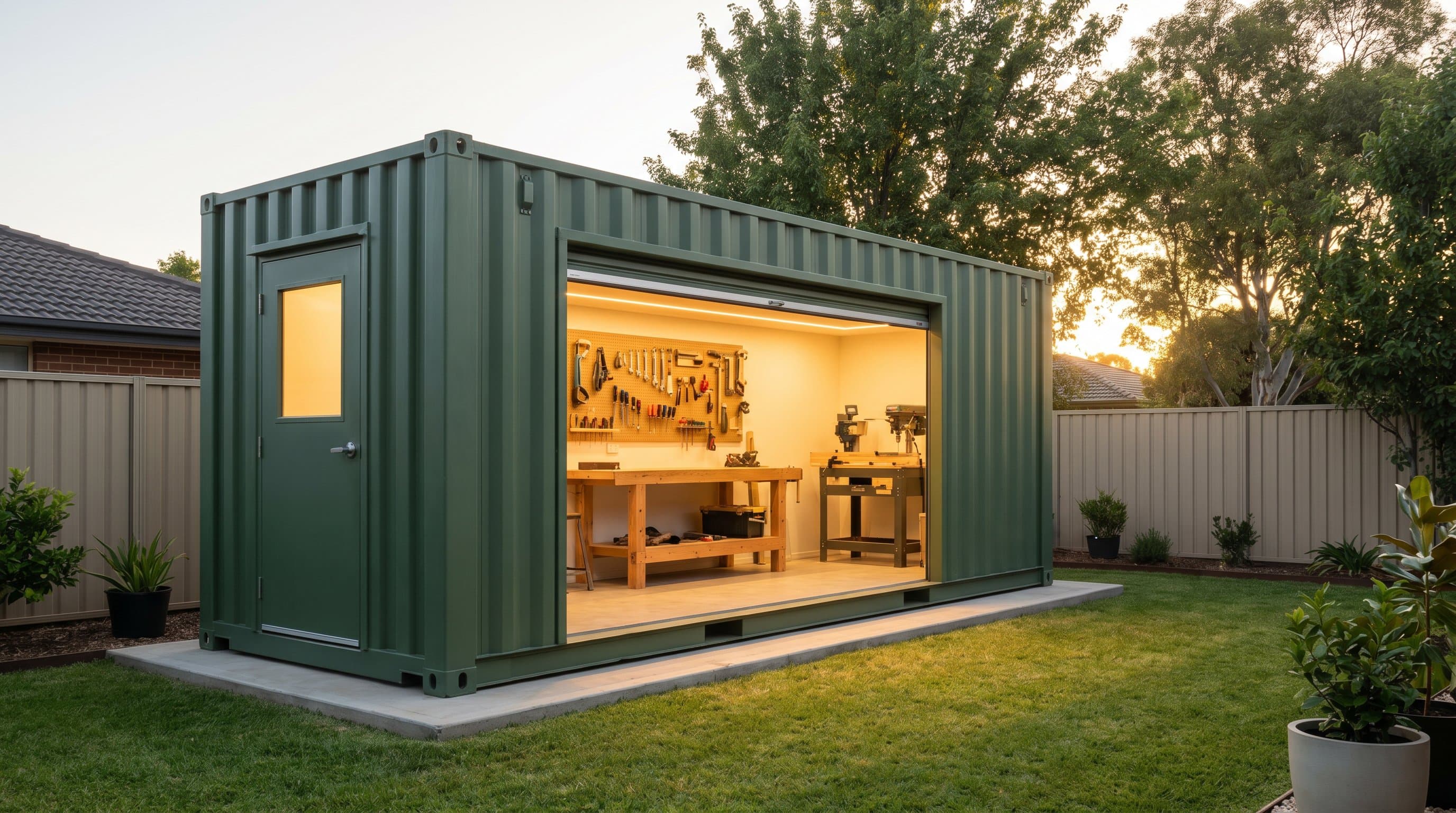
A workshop that ships pre-walled, pre-floored, pre-secure.
A 40ft high-cube used container gives you 320 sqft of locked, dry workspace for less than the lumber cost of a framed shed — and it's already wind-and-watertight when it rolls off the truck.
Why this fits.
- Already weatherproof
- WWT-grade used boxes are wind-and-watertight out of the gate. Seal the door gaskets and you're dry.
- High-cube headroom
- 9ft6in exterior height gives you real standing room on a miter saw, lift, or welding table.
- Built-in security
- Corten steel + welded lockbox is harder to breach than a framed shed with lag-bolted doors.
- Budget-friendly vs. stick-built
- A 40ft HC used box lands ~$3,800–4,900 delivered; a 320 sqft stick-built shop is ~$25,000–40,000 before electrical.
The right starting point for workshops & garages.
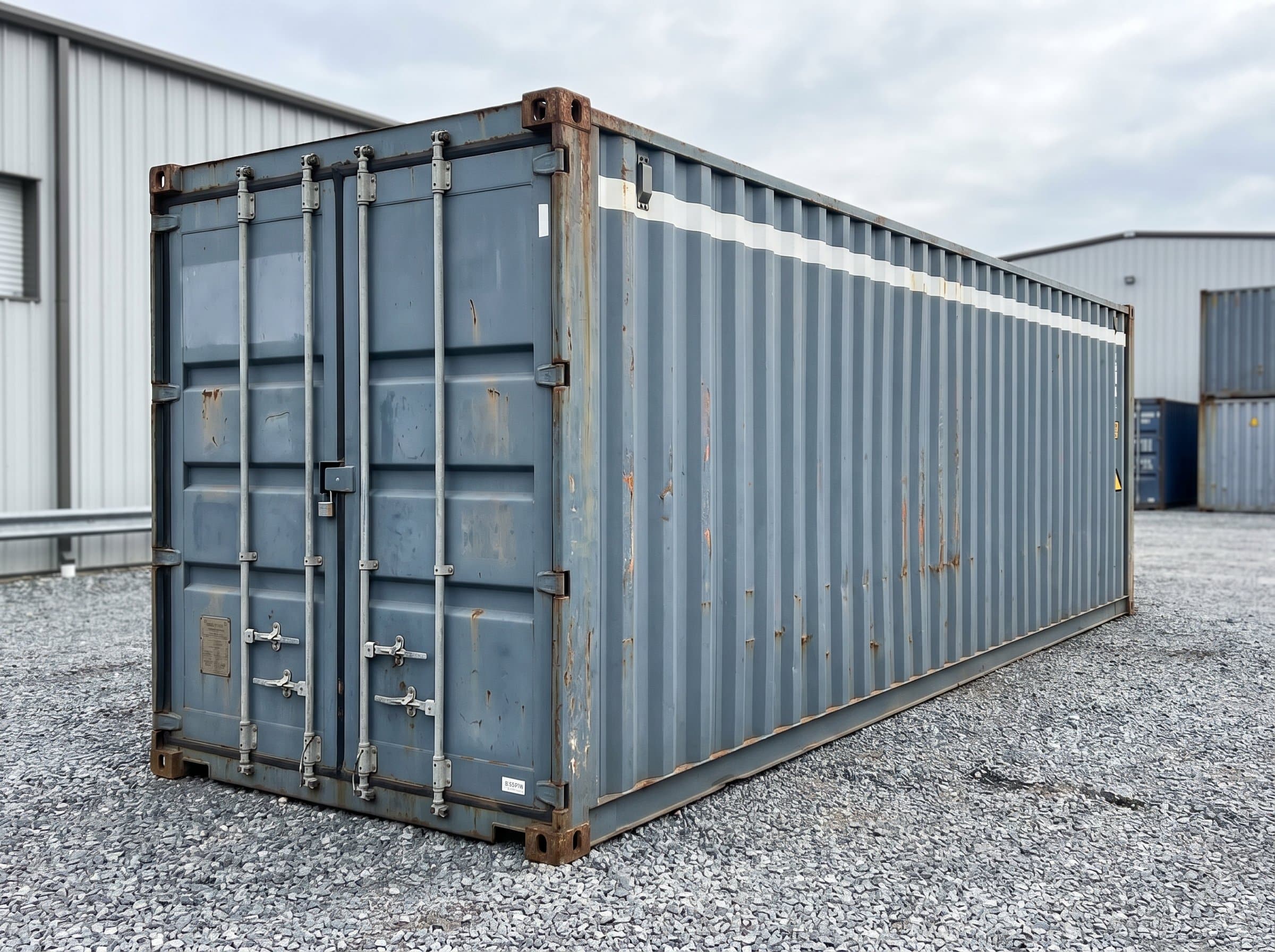

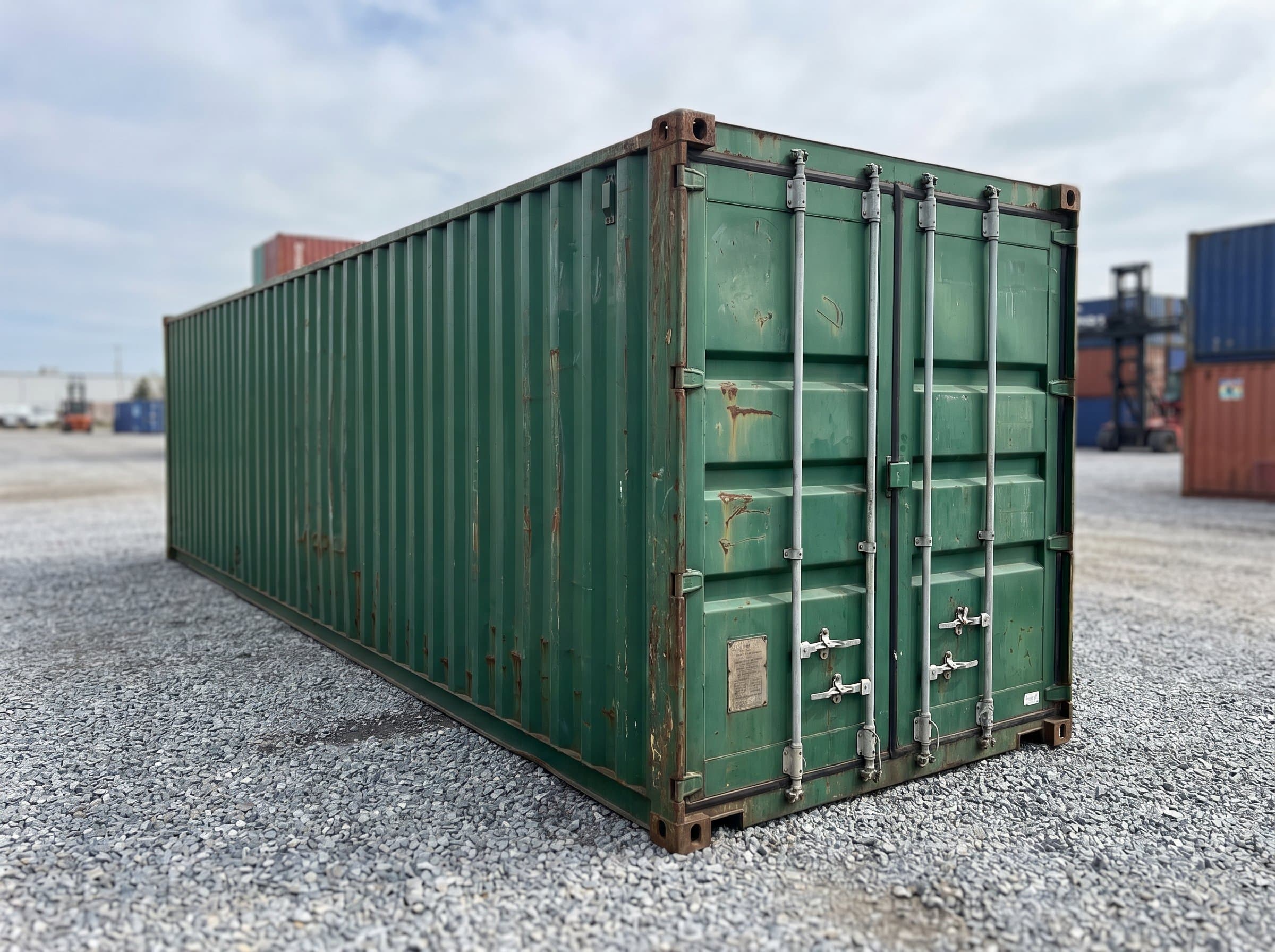
A 40ft high-cube shipping container is the best workshop deal in America. You get 320 sqft of locked, dry, wind-rated workspace for less than the lumber cost of an equivalent stick-built shed, delivered in under a week, zero permit friction in most jurisdictions, and already weatherproof the moment it rolls off the truck. For backyard woodworkers, metal fabricators, automotive hobbyists, and side-business makers, it is the fastest path from idea to heated, lit, powered, locked workspace that currently exists.
Who is a container workshop for
The regulars we deliver to:
- Woodworkers upgrading from a garage shop that is getting eaten by the minivan.
- Automotive hobbyists who need a 4-post lift, compressor, and parts storage in one locked space.
- Metal fabricators + welders needing a fire-resistant enclosure with ventilation.
- Side-business makers (leather, ceramics, candles, furniture) who outgrew the basement.
- Mobile-home operators + tiny-house enthusiasts needing a dedicated prep space.
- Homeowners just tired of a damp shed.
A stick-built 320 sqft shop with concrete pad, framing, insulation, and finished walls is $28,000–$45,000 retail. A modified 40ft HC container workshop with the same spec lands $9,000–$18,000 all-in. The gap is the lumber, the framing labor, the roof deck, and the weatherproofing — all of which are free with a container because it arrives already built.
Sizing: 20ft vs 40ft vs 40ft HC for a workshop
| Size | Floor area | Best for |
|---|---|---|
| 20ft used/WWT | ~160 sqft | Hand-tool woodworking, leather, small maker shop |
| 40ft used/WWT | ~320 sqft | Full cabinet shop, welding, automotive, heavy machine shop |
| 40ft HC used/WWT | ~340 sqft + 1ft more vertical | Any shop where you want genuine 7ft 10in finished ceilings, a 4-post lift, or wall-mounted French-cleat storage running tall |
| 40ft HC one-trip | Same as above | Worth the $2,000 premium if you want spotless cosmetics and the cleanest possible interior to start with |
Almost all serious workshop buyers land on the 40ft HC. The extra foot of vertical makes a real difference the first time you hang a 4x8 sheet of plywood over your head, or run conduit along the ceiling.
Grade: used WWT for most, one-trip for finished shops
For workshop use, used wind-and-watertight is the correct spec 70% of the time:
- WWT saves you $2,000+ per box and still delivers everything a shop needs: dry, lockable, ventilated, weather-rated.
- One-trip is worth the premium only if (a) the workshop will be visible from the street and you care about curb appeal, or (b) you plan to finish the interior to a showroom standard (drywall over insulation, high-end lighting, polished concrete floor). For those cases, starting with a clean one-trip shell simplifies the finish work.
Our rule: if the shop will be "nice but honest," buy WWT and spend the $2,000 savings on better tools. If the shop will be "Instagram-worthy maker space," buy one-trip.
Cost: what a real backyard workshop runs
A realistic finished budget for a 40ft HC used-WWT workshop:
- Container (40ft HC used WWT, delivered): $3,800–$4,900.
- Ground prep (concrete deck blocks or gravel pad with railroad ties): $300–$1,200.
- Man-door cut + install (3ft pre-hung insulated door): $1,000–$1,800.
- Windows (2–3 picture windows for natural light): $1,200–$2,800.
- Roll-up door or barn-door on long side (optional, for wide material intake): $2,200–$4,500.
- Electrical (100A sub-panel, 220V for welders/compressors, 6–8 120V circuits, LED bay lighting): $3,000–$6,000.
- Closed-cell spray-foam insulation (walls + ceiling): $2,800–$4,500.
- Interior wall finish (OSB or plywood on French cleats): $500–$1,500.
- Ventilation / dust collection exhaust port: $300–$800.
- Mini-split HVAC (18k BTU): $3,500–$5,000.
- Flooring (epoxy-coated, rubber mat, or rubber-tile over the existing plywood floor): $600–$2,200.
All-in: $17,000–$35,000 for a fully functional, insulated, powered, heated/cooled, equipped workshop. Compare to a stick-built 320 sqft outbuilding at $28,000–$45,000 with the same finishes, and you save $11,000–$15,000 while getting delivered in weeks instead of months.
Permits: usually skip the whole conversation
A 40ft container is ~320 sqft. In most US jurisdictions:
- Unincorporated counties: no permit required for containers used as workshop / accessory storage. Standard setback rules apply.
- Incorporated cities with modern accessory-structure rules: containers under 400 sqft typically fall under the same no-permit threshold as a conventional shed.
- Strict municipalities: some require a permit for any structure that will be connected to electric. Budget $150–$600 for a simple electrical-only permit in those jurisdictions.
- HOA-governed lots: this is where most permit friction actually comes from. HOAs often restrict container aesthetics regardless of municipal rules. Check the covenant before ordering.
A concrete slab foundation almost always triggers a building permit because a permanent foundation re-classifies the structure as a building. A gravel pad with railroad ties or concrete deck blocks keeps you in the no-permit "accessory structure" category.
The interior build-out that actually matters
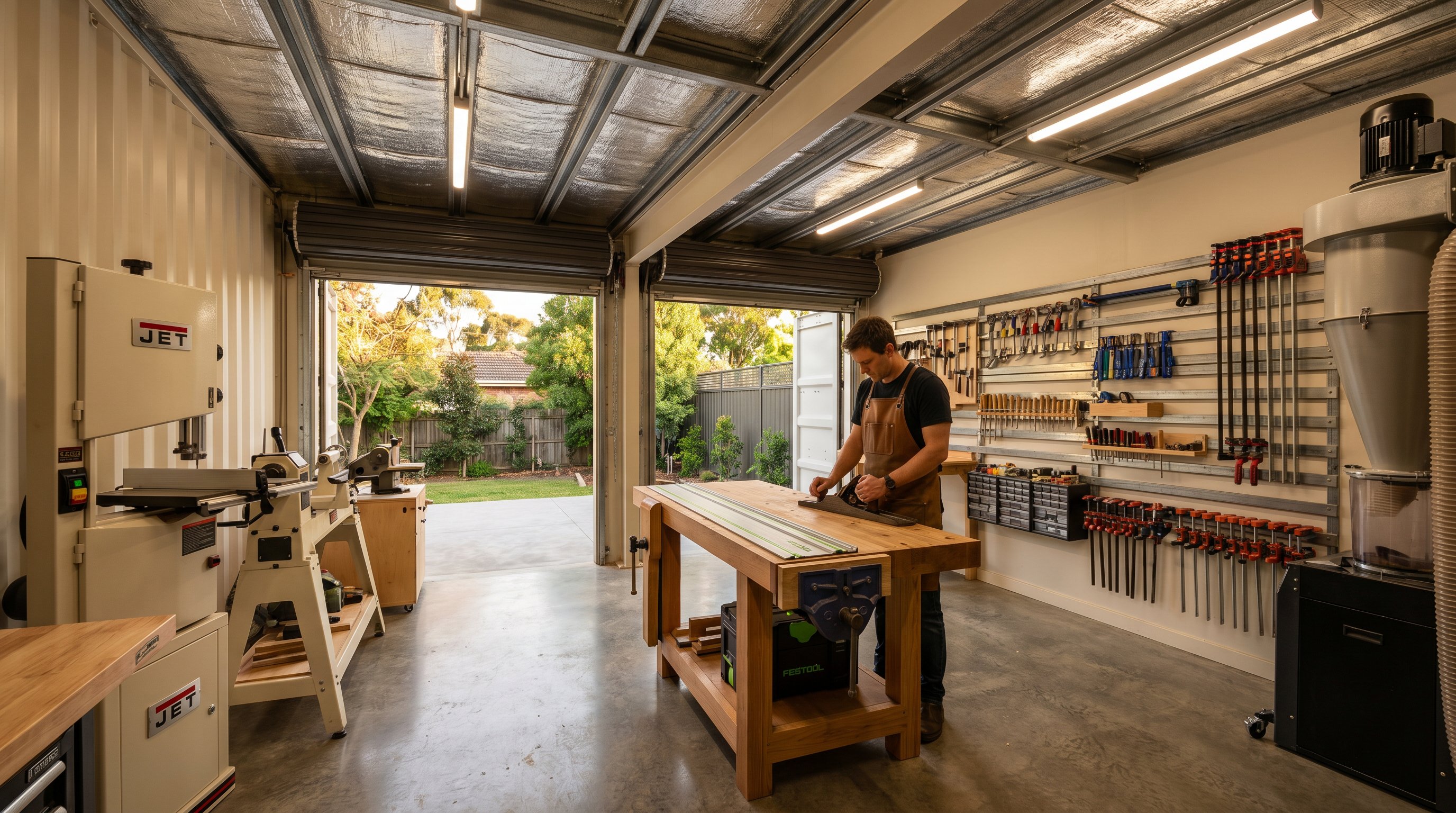
The single biggest mistake first-time workshop buyers make is drywalling the interior like a residential space. Do not. A workshop wants wall-mounted French-cleat storage on OSB or plywood so you can rearrange tools as you learn what you need. Drywall forces you to commit to a layout on day one, when you have no idea yet what your shop wants to be.
The French-cleat workshop recipe:
- Spray-foam the steel walls and ceiling (2 inches closed-cell).
- Furring strips over the foam for air gap.
- 1/2in plywood or 3/4in OSB over the strips, screw-gun attached.
- French-cleat strips at 12-inch vertical intervals on top of that.
- Every tool, holder, shelf, and cabinet hangs on a matching cleat. Reconfigure in 30 seconds.
It is the best storage system in existence for a small shop, and it only works well in a container because the steel walls give you a solid anchor at every screw.
Common mistakes
- Drywall over steel. Tempting for the finished-room look; miserable for workshop flexibility. Use plywood + French cleats.
- Under-spec electrical. A woodworker with a 3HP dust collector and a table saw is pulling 35–40A at peak. Spec a 100A sub-panel from day one.
- No roof insulation. Bare steel ceiling in July heats the shop to 120°F. Closed-cell foam is non-negotiable.
- No mini-split. A shop without climate control is a shop you use 6 months a year.
- Forgetting the dust port. Metal-cutting and wood dust collectors need outside exhaust. Cut it in during the initial build, not after.
What workshops & garages buyers tell us after delivery.
Set up a 40ft HC in the backyard with a miter station, table saw, and a full French-cleat wall. Blows my old garage shop out of the water. Better light, better dust control, and I do not have to move the car to cut a board.
Needed a dedicated space for the project car. 40ft HC with a mini-split and a 100A panel. Lift fit just barely under the HC ceiling. Cost me $18k total including the lift. Showed up on a Tuesday, working on the car the following weekend.
I weld inside my 40ft HC every day. Intumescent paint over the spray foam, a dedicated exhaust port, fire extinguisher inside, dry-chem at the door. Perfectly safe and finally a real studio instead of a carport.
Questions we get on every quote.
Other use cases
We’ll text you back within 1 business hour.
Share your ZIP and what you’re building. We’ll send a written quote with the delivered, all-in number, or tell you where to buy cheaper if we can’t beat it.
Workshops & Garages guide last reviewed .