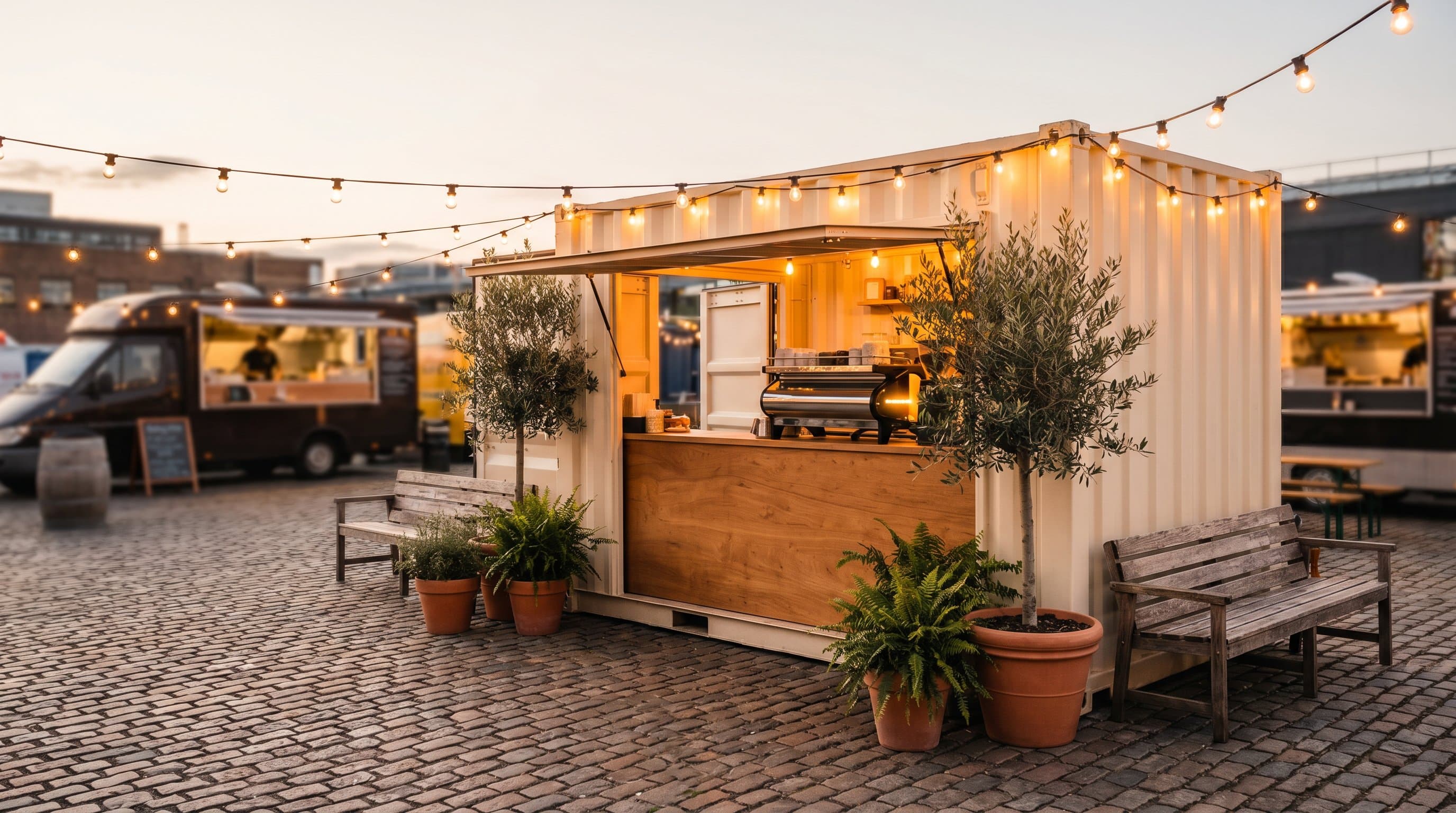
Open a shop that ships on a flatbed.
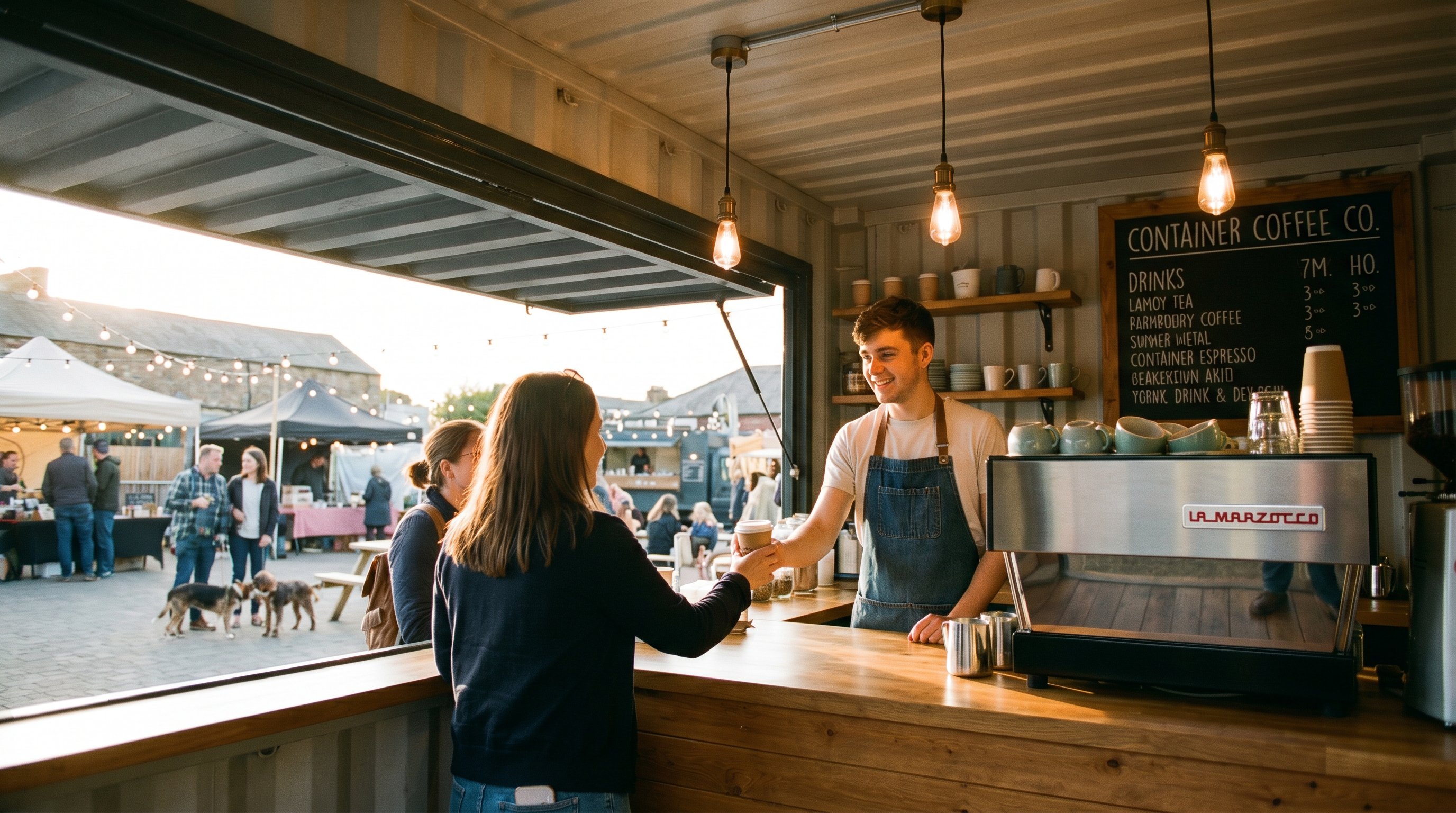
A 20ft one-trip container is a branded, mobile, permit-friendly retail footprint. Paint it, wrap it, move it from market to market.
Why this fits.
- Brand-ready
- Clean one-trip steel holds paint and vinyl wraps like a fresh canvas. No rust-blooms to sand.
- Mobile footprint
- Tilt-bed back onto a truck and relocate to the next market, fair, or event.
- Permit-friendly
- Most jurisdictions treat containers as temporary structures for events under 30 days — no building permit required.
- Coffee, cocktails, retail
- Single 20ft fits a full coffee bar or cocktail program. Double-stack two for a 40x16ft footprint.
The right starting point for retail & pop-up shops.
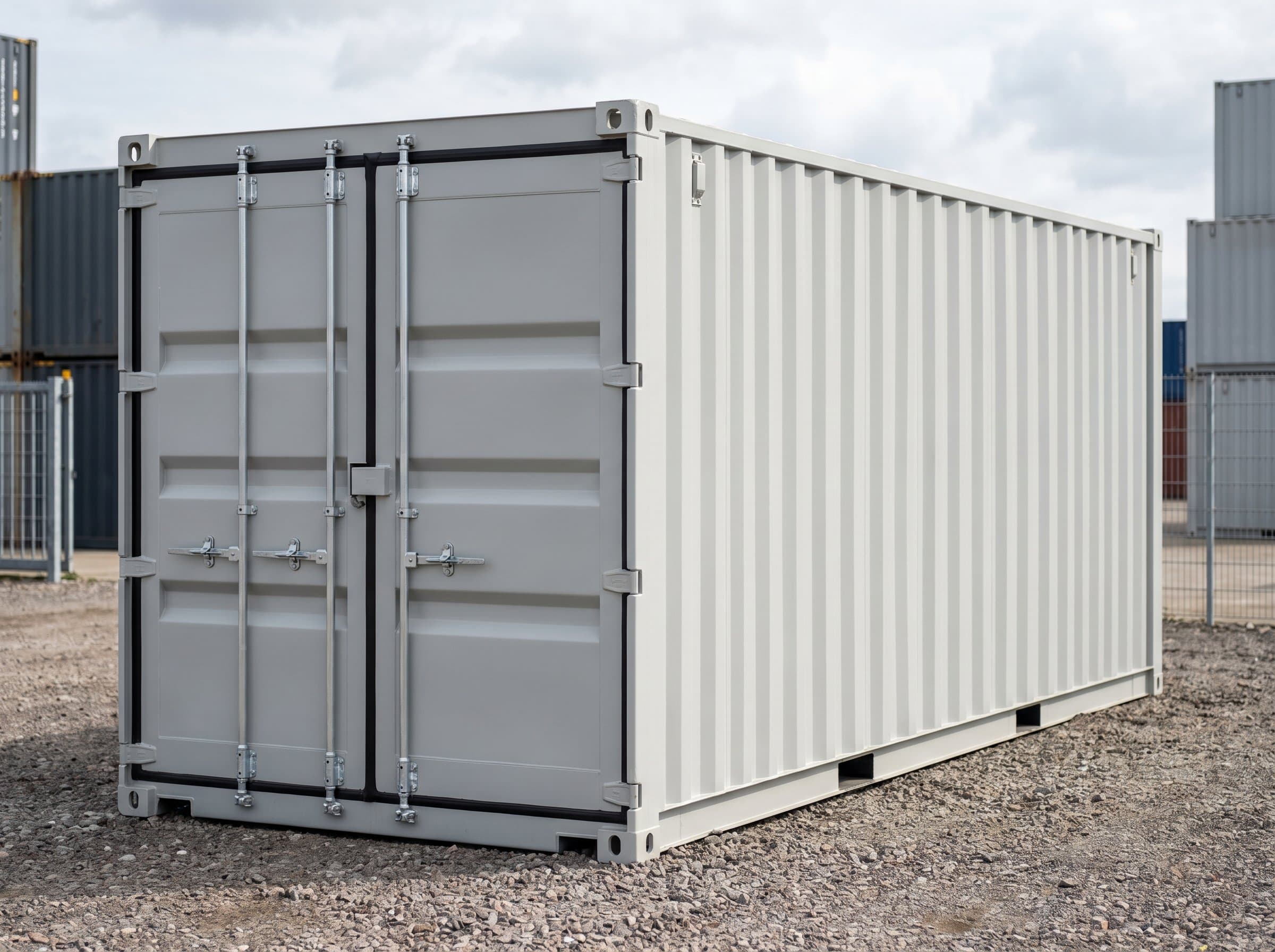
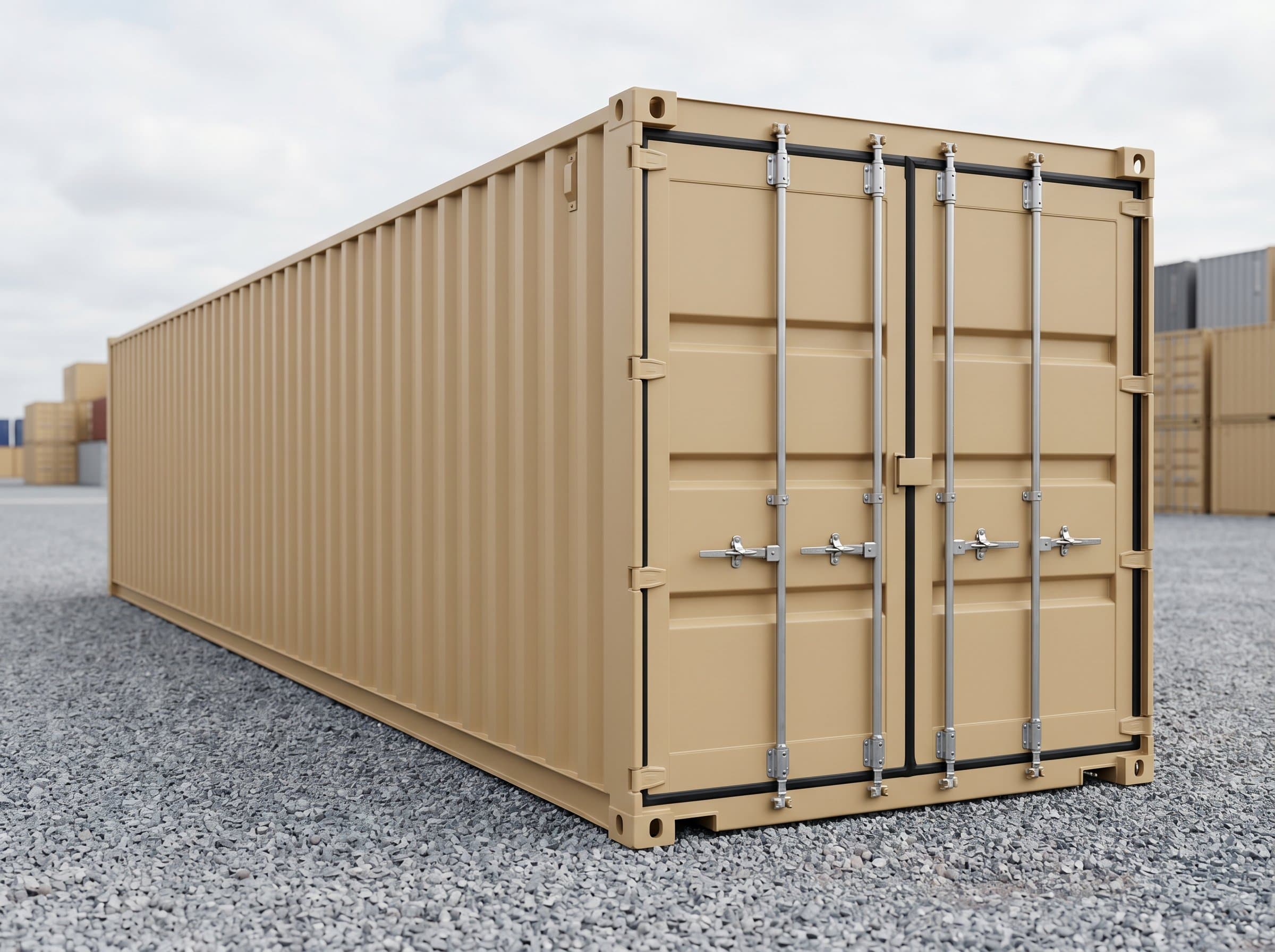
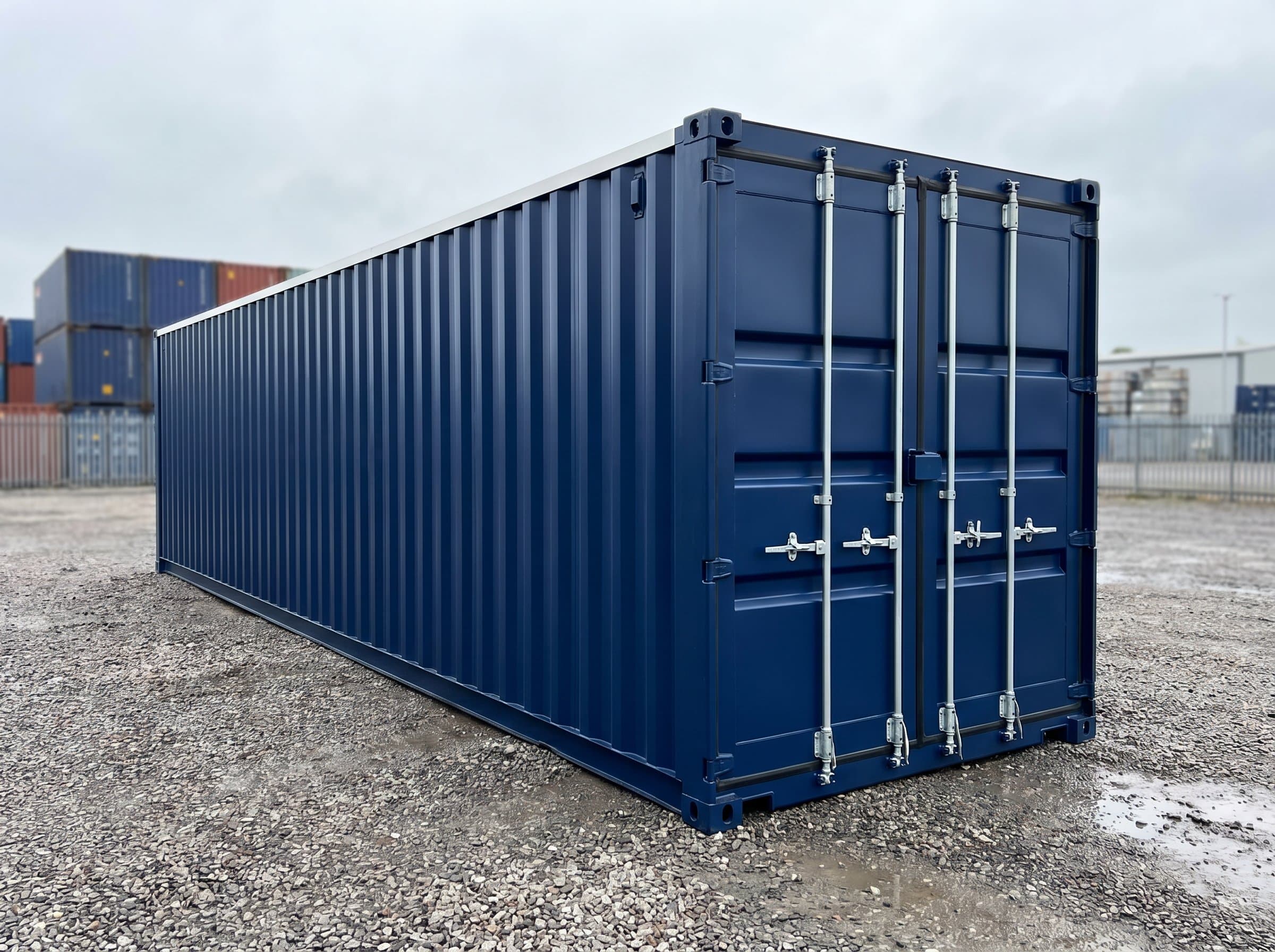
A shipping container is the most permit-friendly way to open a brick-and-mortar retail presence. It is a fully-enclosed, weather-proof, brand-paintable 160 sqft (or 320 sqft) footprint that arrives on a flatbed, sets in 20 minutes, and can be moved to the next market when the lease ends. Because most jurisdictions classify a container-based retail footprint as a temporary or mobile structure, you skip the 6–24 month storefront buildout timeline and open for business in 4–8 weeks total.
Who is buying container retail shops
The regulars:
- Coffee roasters opening mobile or semi-permanent shops in outdoor markets, breweries, and event venues.
- Craft cocktail and natural-wine operators running seasonal pop-ups.
- Apparel and streetwear brands testing a physical footprint without committing to a 5-year lease.
- Art galleries and makers activating under-used commercial plazas.
- Juice bars, ice cream shops, and grab-and-go concepts wanting a built-in brand moment.
- Food truck operators who have outgrown the truck but not a full restaurant.
The economics only work at small-footprint concepts. A 20ft is 160 sqft — plenty for a coffee counter, a cocktail program, a tight retail capsule collection, or a mobile makers shop. If you need seating, add an adjacent outdoor patio with picnic tables; do not try to sit customers inside the container.
Sizing: 20ft for counter service, 40ft for full shop
| Size | Use | Typical buildout |
|---|---|---|
| 20ft one-trip | Counter-service coffee, cocktails, grab-and-go, capsule retail | Serving window + back-of-house prep, no interior seating |
| 40ft one-trip | Full retail shop, gallery, showroom with interior customer area | Front-facing glass doors + interior merchandising + back stockroom |
| 40ft high-cube | Same as 40ft but with taller ceiling | Worth it for visually driven brands — an extra foot of ceiling reads as "premium" inside |
| Double-stacked 40ft HC | 640 sqft, two floors | Mezzanine retail + rooftop deck, or upstairs office + downstairs shop |
Around 70% of our retail-pop-up buyers land on a single 20ft. It is the cheapest footprint that still looks professional, and it is movable when the lease ends.
Grade: one-trip, for brand reasons
For retail, you need a one-trip container. Two reasons:
- Paint holds. A one-trip container is factory-primed clean steel. Automotive-grade paint adheres cleanly with minimal prep. A used container has oxidation, patched scabs, and paint that will telegraph through your finish coat inside 12 months.
- Brand photography. You will shoot hundreds of Instagram photos of this shop. Surface rust on a used container reads as "abandoned" in a brand context, not "industrial chic." The one-trip premium pays for itself in content quality.
Skip the $2,000 savings. Buy clean.
Cost: what a retail container shop actually runs
A realistic all-in budget for a 20ft one-trip retail pop-up:
- Container (20ft one-trip, delivered): $5,400–$6,800.
- Barn-door or serving-window cut + frame: $1,800–$3,500.
- Secondary entry door + windows: $1,200–$2,800.
- Paint or vinyl wrap (full exterior brand treatment): $1,500–$4,500.
- Interior buildout (counter, shelving, POS, cabinets): $6,000–$15,000.
- Electrical (sub-panel, GFCI outlets, LED lighting, water heater if sink): $2,500–$5,000.
- Plumbing (if coffee/cocktail with a sink): $2,000–$5,000.
- HVAC (mini-split): $3,000–$4,500.
- Equipment (espresso, ice machine, fridge, POS, etc.): varies wildly by concept, $4,000–$30,000+.
- Local permits + health department: $500–$3,500 depending on jurisdiction and whether food service is involved.
Typical coffee-or-cocktail-focused all-in: $25,000–$55,000 for a turn-key mobile retail shop, excluding equipment. Compare that to a traditional storefront buildout at $150–$400 per sqft — and you are also not signing a 5-year lease.
Permits: the mobile-structure advantage
This is the single biggest reason to choose a container for retail: most US jurisdictions treat shipping-container retail as a temporary mobile structure, not a building.
What this typically means, in practice:
- No building permit for the structure itself (it sits on its own chassis or on concrete deck blocks, not a permanent foundation).
- Temporary use permit from the jurisdiction for the location, renewable every 6–24 months.
- Business license + health department permit if you are selling prepared food or beverages.
- Zoning verification — the parcel must permit retail use.
- ABC licensing if alcohol is involved (this runs by state and can add 60–180 days regardless of structure type).
In event or festival settings (under 30 days), many jurisdictions waive the temporary use permit entirely and treat the container as any other vendor booth.
The key to this working: the container must not be on a permanent foundation. Concrete deck blocks, railroad ties, or gravel pad with tie-downs keep you classified as a temporary structure. A poured slab under the container can re-classify the whole project as a permanent building, triggering full building code.
Modifications we see most often
Must-haves:
- Serving window with hinged barn-door cover on the long side — this is the primary customer interface.
- Secondary entry door on the short end for staff.
- Exterior paint or vinyl wrap in brand colors.
- Interior LED lighting on a dimmer.
- Mini-split HVAC so staff are comfortable in summer.
Concept-specific:
- Coffee: plumbed water line, floor drain, espresso machine hardware, pastry case.
- Cocktails: bar sink, glasswasher, liquor cabinet, keg tap system.
- Apparel/retail: merchandising shelves, hanging rods, display counter, fitting nook.
Skip:
- Interior customer seating in a 20ft (too cramped; do outdoor patio instead).
- Drive-thru windows (turning-radius and fire-marshal issues).
- Built-in roof seating or mezzanines (engineer-required, adds $8,000+).
Timeline: deposit to grand opening
- Week 0: confirm zoning and location permit-ability with the jurisdiction. Order the container.
- Week 1–2: site prep, foundation blocks, utility stubs.
- Week 2–3: container delivered, placed.
- Week 3–6: cuts, paint, electrical, plumbing, HVAC, interior millwork.
- Week 6–7: equipment install, health department inspection, final electrical sign-off.
- Week 8: soft open, then grand opening.
Most container pop-ups we deliver for F&B concepts are serving customers within 6–8 weeks of delivery, which is faster than many storefront leases even reach the buildout stage.
Common mistakes
- Buying used. For retail, one-trip every time. Paint, photography, brand perception.
- Undersizing the electrical. A coffee operation easily draws 60–80A at peak. Spec the panel accordingly.
- Permanent foundation. Costs you the mobile-structure classification. Stick to deck blocks or tie-downs.
- Skipping the awning. A metal roof in direct sun radiates heat downward. A 4–6ft awning over the serving window is a customer-experience lifesaver.
- Under-branded exterior. You paid for a mobile billboard. Paint it all the way out, top to bottom, one color + one graphic, readable from 100 feet.
What retail & pop-up shops buyers tell us after delivery.
Opened the second location as a 20ft one-trip container in the parking lot of a brewery. Signed the parking-lot lease on a Monday, container delivered 2 weeks later, opened for coffee 5 weeks after that. I could not have done that in a regular storefront.
The container mobility is why we chose it. We run 3-month pop-ups at outdoor markets from May through October. Same container, different locations every season.
Tested our first physical retail with a 20ft container in an outdoor mall. Six months, sold through the full capsule collection, learned what customers actually buy in person. Graduated to a real storefront after that with 5x the confidence.
Questions we get on every quote.
Keep researching retail & pop-up shops.
Long-form guides written by our own sourcing team. No fluff, no affiliate spam, just the stuff we tell people on the phone every week.
Other use cases
We’ll text you back within 1 business hour.
Share your ZIP and what you’re building. We’ll send a written quote with the delivered, all-in number, or tell you where to buy cheaper if we can’t beat it.
Retail & Pop-Up Shops guide last reviewed .