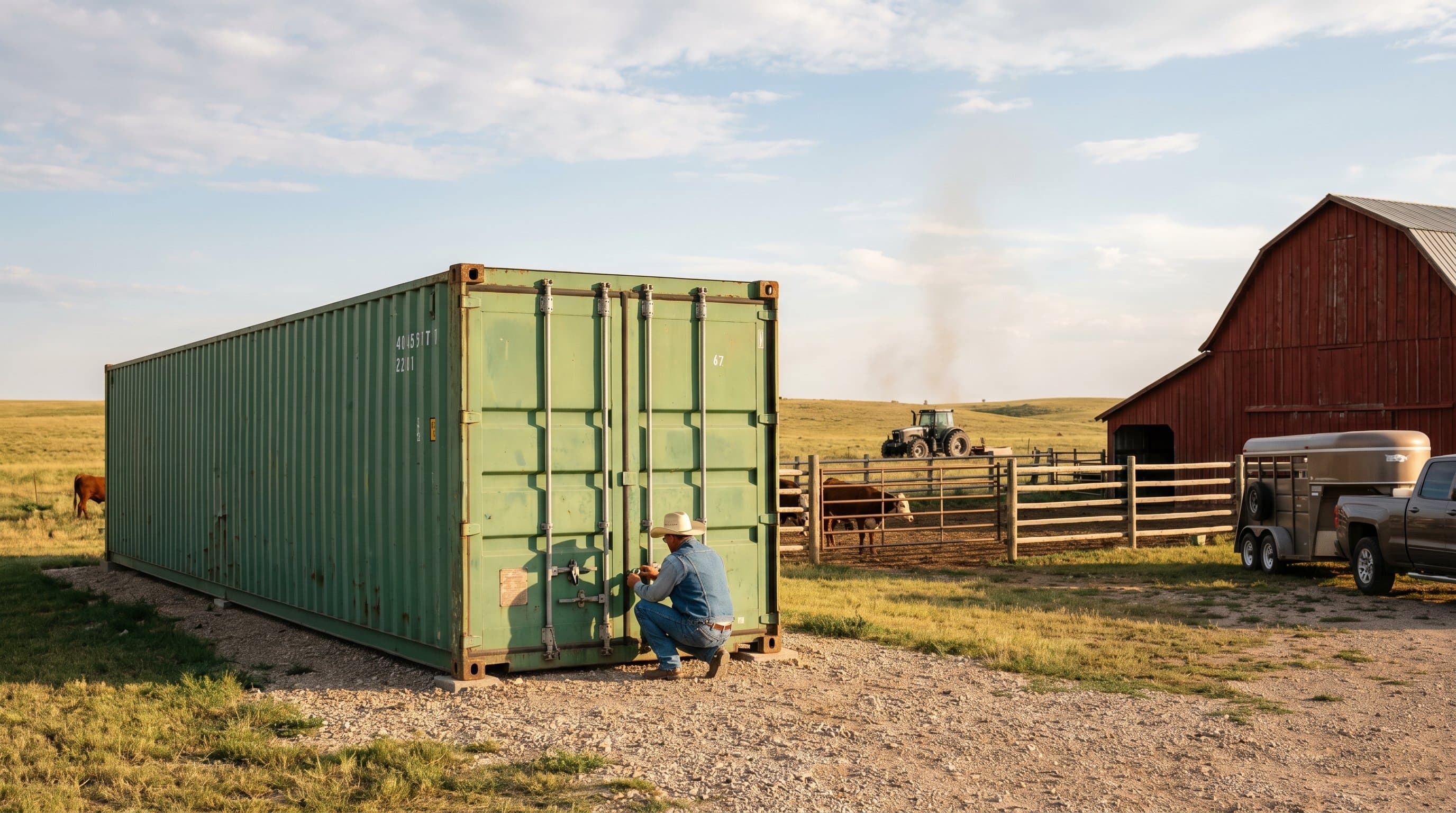
A barn that shows up on a truck Tuesday.
A 40ft used shipping container is a locked, dry barn alternative for hay, tack, tools, and seed — no concrete pad, no permit in most ag zones, no 90-day build.
Why this fits.
- No permit in most ag zones
- Unincorporated county ag land typically exempts container storage from accessory-structure permits. Always verify locally.
- Hay stays dry
- Closed-cell spray foam on the ceiling drops internal temp 20–30°F in summer and keeps condensation off bales.
- Tie-down friendly
- Corner castings accept standard ratcheting tie-downs to ground anchors — tornado-belt standard kit.
- Ranch-ready matched sets
- We source matched paint/production-run containers for multi-unit barns and enclosed runs.
The right starting point for farm & ranch.
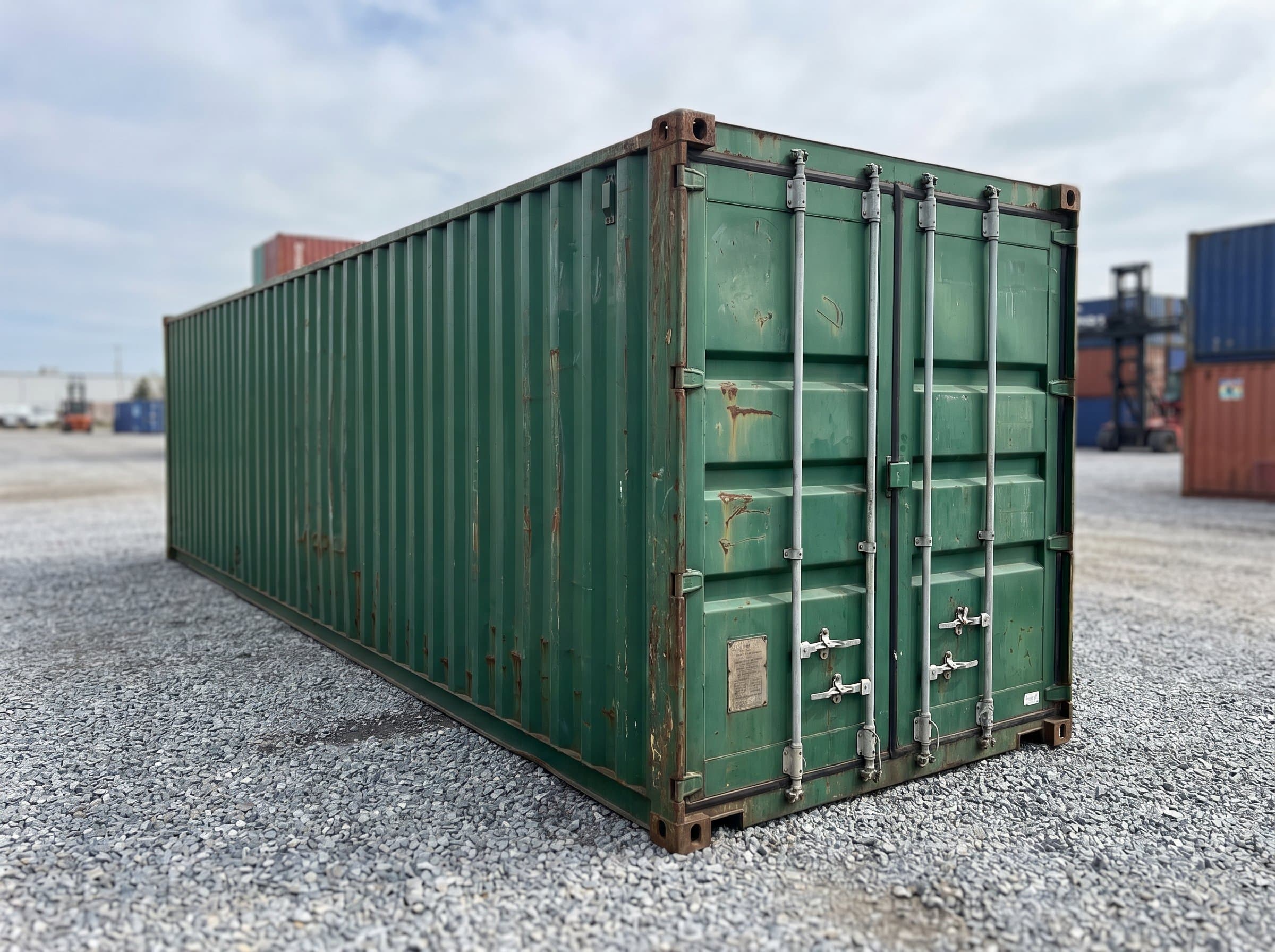
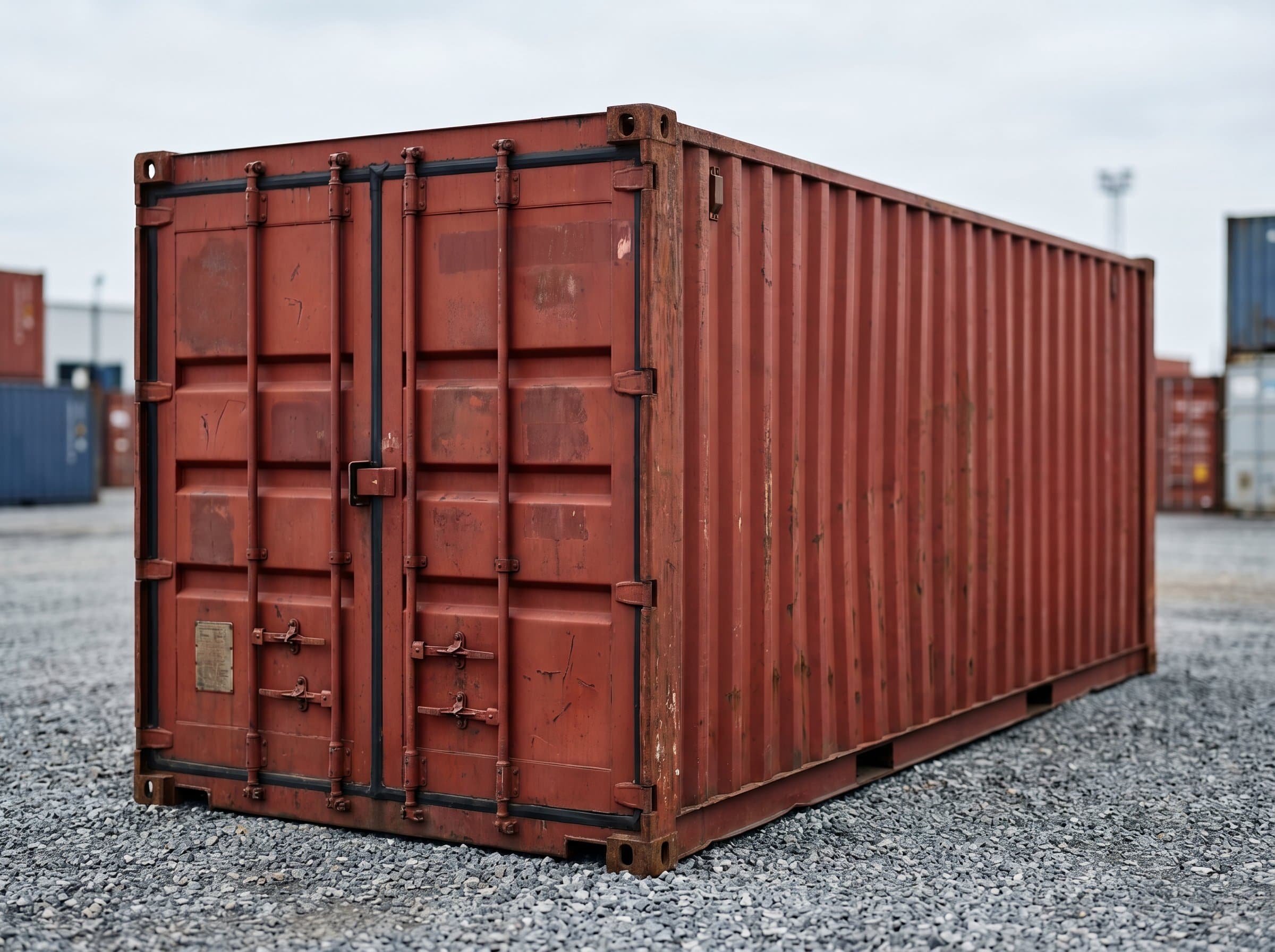
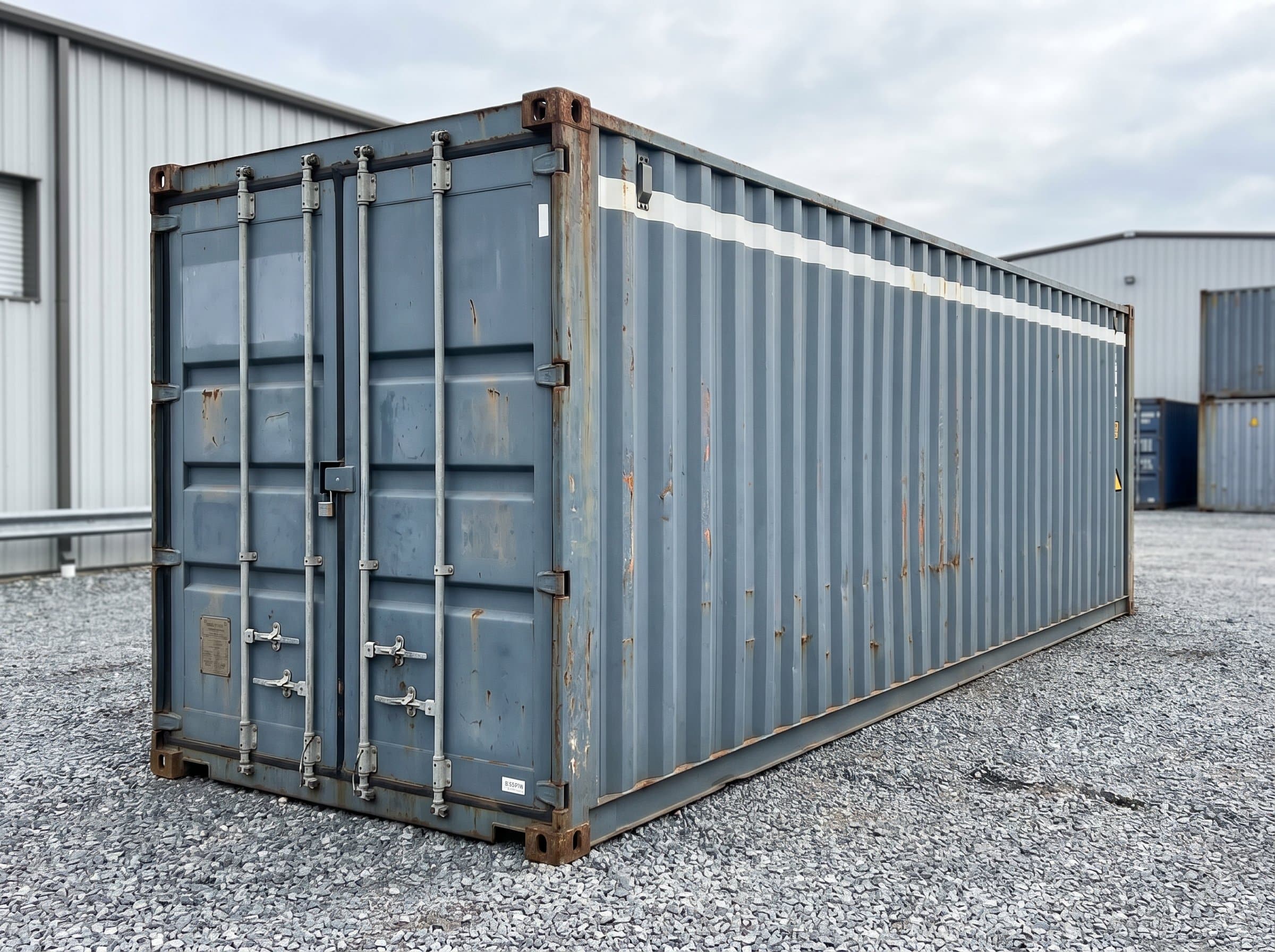
A 40ft shipping container is the closest thing to a prefab barn that currently exists in the American agricultural market. It arrives on a flatbed ready to lock, dry, and weather-proof, costs less than half of a stick-built pole barn of equivalent footprint, and requires no concrete pad, no framing crew, and no 90-day build. For ranchers, horse operators, and small farmers, it has quietly become the default answer for hay, tack, feed, tool, and seasonal-equipment storage.
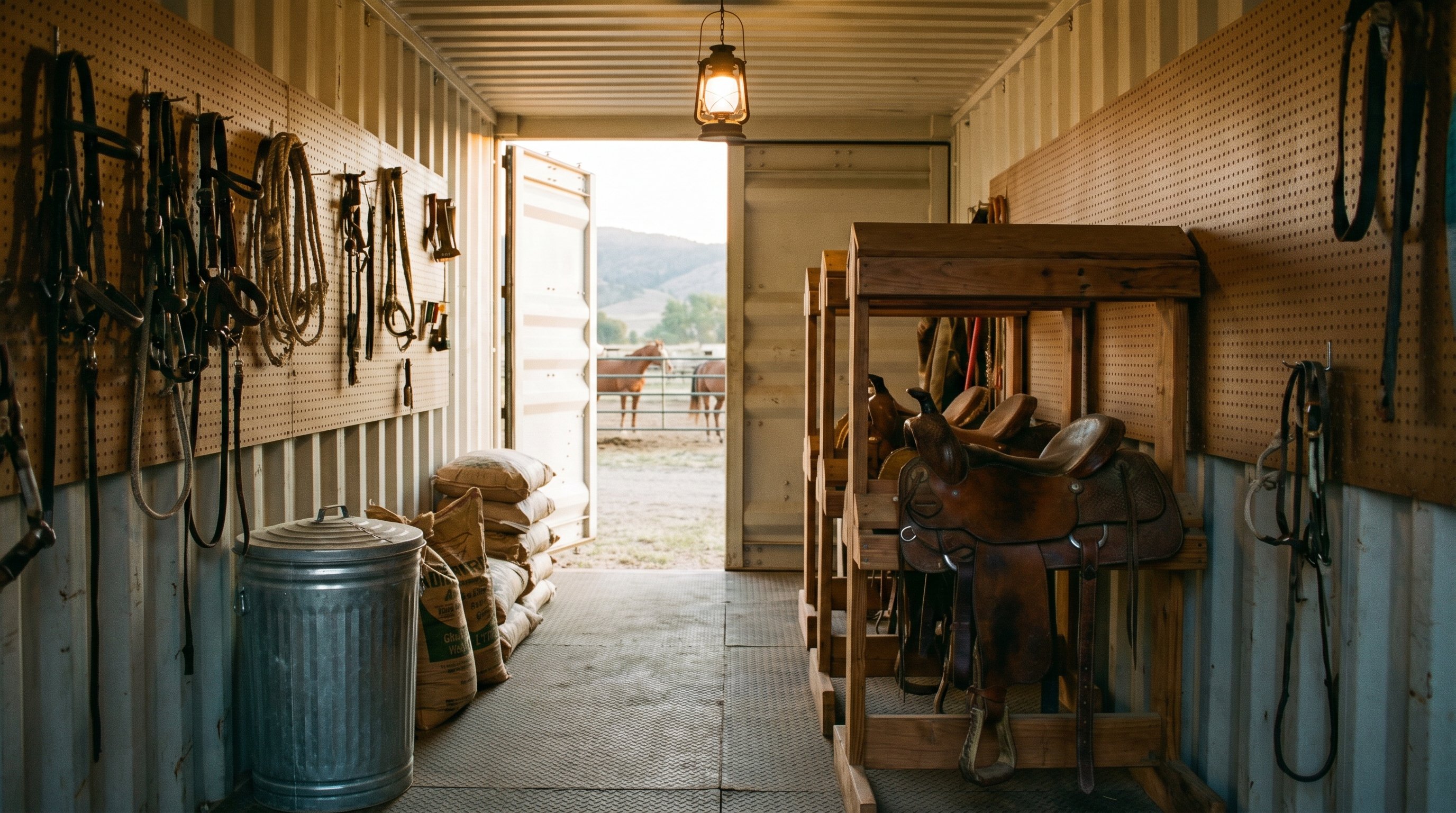
Who on a ranch is this for
Every working ranch we deliver to uses containers for at least one of the following:
- Hay storage — out-of-the-weather hay keeps 18–36 months with no moisture loss, vs. 6–9 months stacked under a tarp in the rain.
- Tack + saddles + bridles — a dry, locked, pest-free home for leather goods that otherwise rot or get chewed.
- Feed bins — rodent-proof bulk feed storage (with proper door-gasket sealing).
- Ranch-hand tool storage — chainsaws, fence tools, post drivers, power tools, welders, torches.
- Seasonal equipment — hay-bine attachments, sweeps, mower decks, sprayers that sit 8 months a year.
- Livestock tack rooms on working cattle + horse operations.
We also see it increasingly as a break room / crew bunkhouse on large operations — a 20ft insulated container with a mini-split, a small kitchenette, and a couple of bunks is a vastly better hand-housing solution than a trailer.
Sizing: 20ft vs 40ft on a working ranch
| Size | Holds | Who it fits |
|---|---|---|
| 20ft WWT | 40 round bales + tack wall + feed bin | Small horse operation, homesteader, 5–20 acres |
| 40ft WWT | 80 round bales, or 20 bales + tack room + full shop | Working horse ranch, medium cow-calf, 20–200 acres |
| 40ft HC used | Same volume + 1ft more vertical height | Any op that stacks round bales 4-high or needs to hoist a saddle over head-height |
| Ranch bundle (3+ units) | Matched production runs, stacked or lined | Large cow-calf, multi-trade ag operation |
Most ranchers land on a 40ft as their first unit and a 20ft as the second. The 40ft handles bulk hay; the 20ft becomes the dedicated tack-and-tool room that stays uncluttered.
Grade: WWT is the standard, CWO if you are coastal
For ag use, you do not need a one-trip. WWT is the correct spec.
- WWT (Wind & Watertight) is what ships on 80% of ranch deliveries. Visible surface rust is cosmetic and actually helps the container blend in on a working ranch — the worst-looking ranch equipment is the equipment that looks too new.
- CWO (Cargo-Worthy) is worth the ~$400 premium if you are in a coastal state (Gulf Coast, Atlantic, Pacific) where salt-air corrosion is real.
- Skip New / One-Trip unless the container is going to serve as a branded ag-tourism kitchen or visible farm-stand retail footprint.
Cost: what a ranch container actually runs
A realistic all-in budget for a working ranch container:
- Container (40ft WWT, delivered to ag address): $2,250–$3,200.
- 20ft WWT, delivered: $2,800–$3,400.
- Ground prep (gravel pad or railroad ties under corners): $150–$600 if you do it yourself, $600–$1,800 with a local excavator.
- Ventilation (2–4 louver vents): $250–$600.
- Upper-roof spray-foam insulation (keeps hay temp down 20–30°F in summer, worth it): $1,800–$3,000.
- Interior shelving / peg board / saddle racks / feed bin mounts: $400–$1,500.
- Ratcheting tie-down anchors (tornado-belt requirement): $200–$500.
- Optional: man-door cut-and-frame for daily access without opening big cargo doors: $1,200–$2,500.
All-in, most ranch container installs land $3,200–$6,800 including ground prep and basic interior fit-out. Compare to a 40x20ft pole barn at $18,000–$35,000 and you understand why containers have taken over this market in the last decade.
Permits: the single biggest reason ranchers buy containers
Most unincorporated US agricultural counties exempt containers from accessory-structure permits entirely, provided they are used for agricultural purposes.
This is why containers and pole barns coexist on ranches instead of containers replacing them outright: containers give you a working storage structure today, zero permit friction, zero inspection, zero property-tax reassessment. A pole barn triggers a permit + reassessment + 60–180 day build in most ag zones.
Things to verify with your county before ordering:
- Ag-use exemption. Most counties have one; confirm on the parcel-level record.
- Setback rules from the property line.
- Max structure count per parcel (rare but real on smaller acreage).
- HOA / covenant rules if the parcel is in a ranchette development.
In general, the more rural your parcel, the more permissive the rules. 20+ acre parcels in unincorporated counties are almost always a no-permit install.
Hay storage specifics
The single biggest ag use of containers is hay storage, and it deserves its own callout.
- Insulate the roof. Uninsulated steel in direct sun heats the inside of the container to 120–140°F in July. That dries out hay and accelerates nutritional loss. A 2-inch closed-cell spray foam on the ceiling drops internal temp 20–30°F.
- Ventilate aggressively. Four louver vents (2 high, 2 low, on opposite short walls) creates enough cross-flow to keep condensation off bales overnight.
- Never stack damp. Container-stored hay that was baled at >18% moisture will mold inside 3–5 weeks. Test bales before loading.
- Elevate the first layer. A row of pallets on the floor keeps the bottom layer off the plywood and out of any accumulated condensation moisture.
Common mistakes we see on ranches
- Placing on sod. Long-term, sod under a container rots and the container sinks unevenly. Gravel pad or railroad ties under the corners extends life by decades.
- Skipping ventilation. Condensation inside a sealed container ruins leather tack and galvanizes feed sacks together. Vent it.
- Not using matched production runs for multi-unit installs. Two side-by-side 40fts from different production runs show color and profile differences that are visible from 200 feet away. Always specify matched runs for ranch bundles.
- Forgetting tie-downs in tornado belt. A 40ft empty container weighs 8,000 lbs. A 100mph straight-line wind will move it. Strap it.
What farm & ranch buyers tell us after delivery.
Put 3 matched 40fts on the back 40 as a hay-and-tack complex. County never blinked, delivered in two days, still dry as a bone after 2 winters. Paid for itself on hay loss alone in the first year.
I needed a tack room that would not get eaten by mice. One 20ft WWT, spray-foamed the ceiling, added two vents, put peg board and saddle racks inside. My leather stays dry and the rats cannot get in.
Bought a 40ft for hay storage in the high country. Survived 4ft of snow on the roof last winter without a dent. I would have spent 10x that on a real barn and gotten worse weatherproofing.
Questions we get on every quote.
Other use cases
We’ll text you back within 1 business hour.
Share your ZIP and what you’re building. We’ll send a written quote with the delivered, all-in number, or tell you where to buy cheaper if we can’t beat it.
Farm & Ranch guide last reviewed .